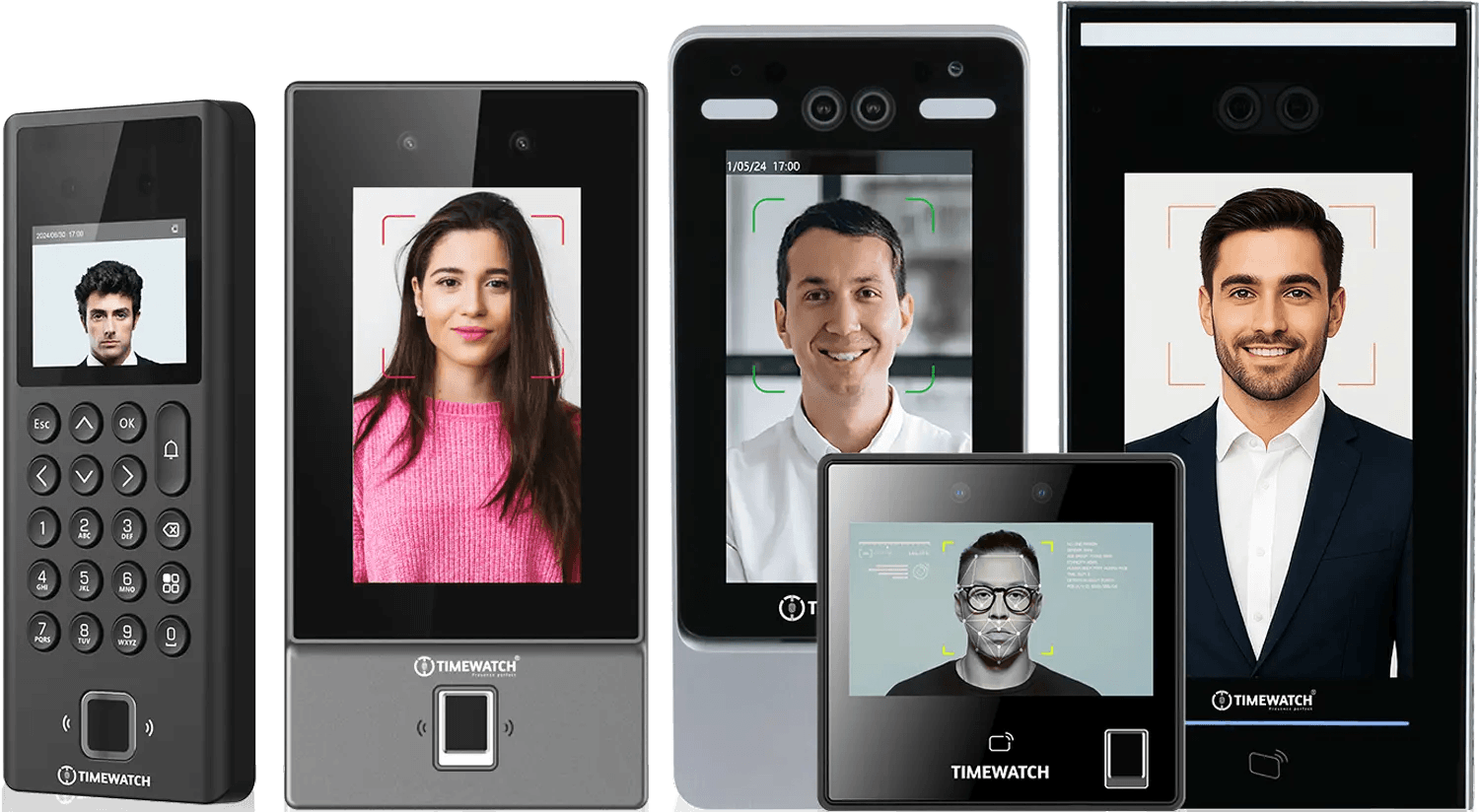
A biometric attendance system records an employee's working hours automatically using a unique physical trait — a face, a fingerprint, a palm vein pattern or an iris scan — instead of a manual register, a punch card or a swipe card that can be shared, forgotten or misused. For organisations in Saudi Arabia managing anywhere from a handful of staff to several thousand employees across multiple sites, this single change removes one of the most persistent and costly problems in workforce management: attendance data that cannot be trusted.
TimeWatch Arabia manufactures and supplies biometric attendance systems built specifically for the operating conditions and compliance requirements of the Kingdom. Our devices are deployed in corporate headquarters in Riyadh, manufacturing plants in Dammam and Jubail, hospitals in Jeddah, and educational campuses across the Eastern and Western provinces. Every installation is backed by local supply, on-site installation, staff training and after-sales support, so the system keeps working long after the first day it goes live.
This page explains what a biometric attendance system is, how it works end to end, the features that matter most when selecting one for a Saudi workplace, the industries that rely on it most heavily, and the questions we are asked most often by HR and operations teams evaluating a purchase.
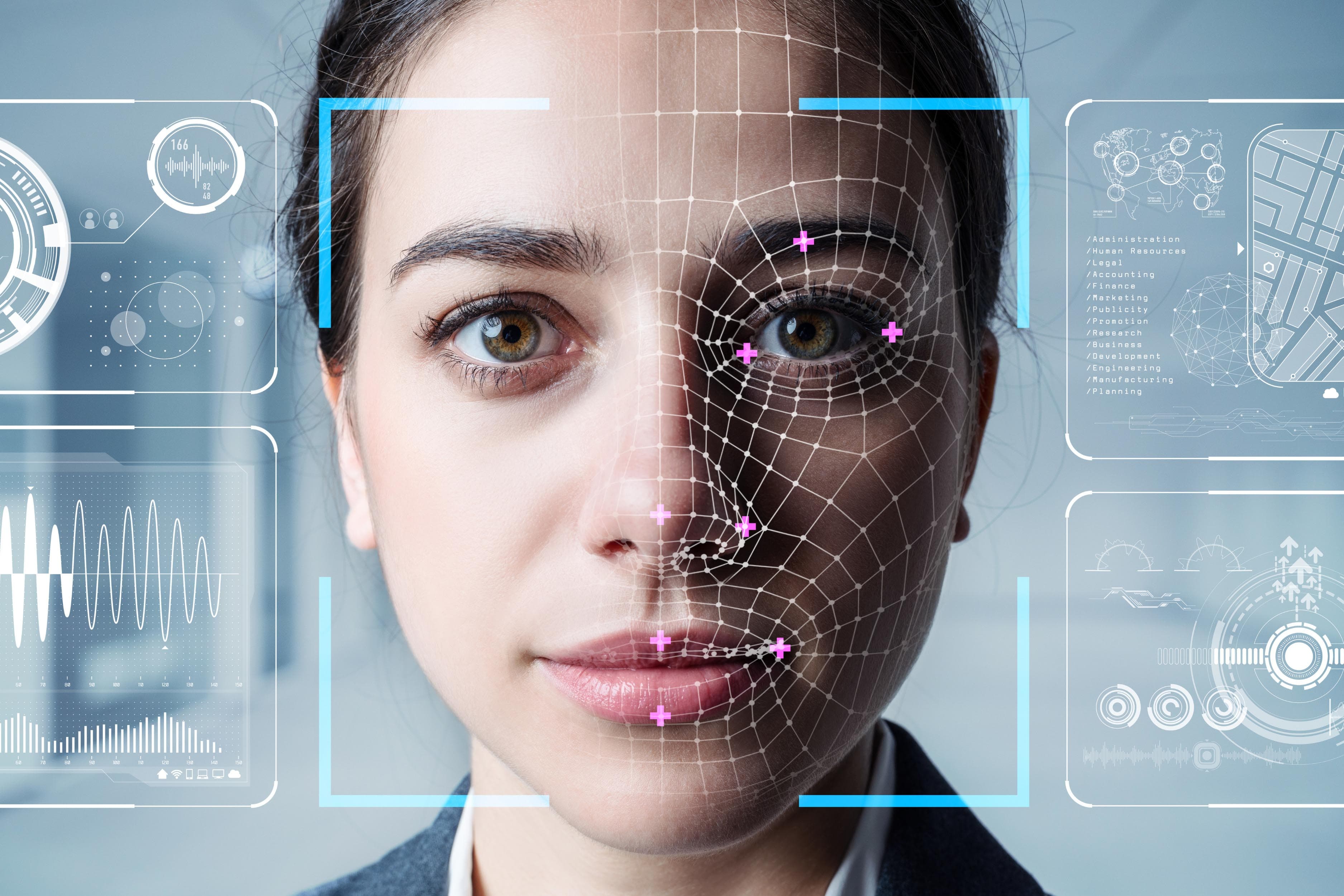
At its core, a biometric attendance system is made up of two parts working together: a biometric terminal (the physical device where an employee identifies themselves) and attendance software (the platform that stores, processes and reports on that data). The terminal captures a biometric sample at the moment of enrolment — for example, several images of a face from different angles, or several scans of a fingerprint — and converts it into an encrypted mathematical template. This template, not the raw image, is what is stored and compared against every time the employee checks in or out.
This distinction matters for two reasons. First, it means the system is fast: matching a live scan against a stored template takes a fraction of a second, even in a database with thousands of enrolled employees. Second, it means the system is private and secure: the original fingerprint or facial image is never stored in a form that could be reverse-engineered or exposed if a database were compromised, particularly when the platform uses AES-128 encryption for data at rest and in transit, as TimeWatch Arabia's systems do.
Understanding the full workflow helps explain why biometric attendance is both accurate and fast enough for busy Saudi workplaces with hundreds of employees clocking in within the same 15-minute window.

Each employee is enrolled once, typically taking under a minute per person. For face recognition, the employee looks at the device from a normal standing distance while the system captures the facial geometry from multiple angles. For fingerprint, the employee places a finger on the sensor two or three times to build a reliable template. For palm or iris, a similar short capture process applies. The resulting template is linked to the employee's ID in the software.

When the employee returns to the device to mark attendance, the terminal captures a fresh sample and compares it against the stored template. Modern face-recognition terminals complete this in well under a second, even for employees wearing masks, glasses, or facial hair that has changed since enrolment, because the underlying AI models are trained to tolerate normal day-to-day variation.

Once verified, the attendance event — employee ID, timestamp, device location, and event type (in or out) — is transmitted to the central software, either over the local network, a cloud connection, or both depending on the deployment. Multi-branch organisations in Saudi Arabia typically use cloud synchronisation so that attendance from Riyadh, Jeddah and Dammam offices appears on one unified dashboard in real time.

The software applies the organisation's shift rules, grace periods, overtime thresholds and leave records to convert raw clock-in/clock-out events into finished attendance data — total hours worked, late arrivals, early departures, absences and overtime. This processed data is what HR and finance teams actually use.

Finished attendance data is exported in a format payroll systems can consume directly, and in a format compatible with the Wage Protection System (WPS) used across Saudi Arabia to verify that wages are paid correctly and on time. This removes the manual, error-prone step of re-typing attendance figures into payroll every pay cycle.
Not every biometric attendance system on the market is built for Gulf operating conditions, and the feature set that matters most changes depending on the type of organisation deploying it.




Multi-biometric flexibility is the first consideration. TimeWatch Arabia devices support face, fingerprint, palm and iris recognition, either individually or combined on the same terminal. This matters in practice: a corporate office in Riyadh may prefer contactless face recognition for speed and hygiene, while a factory floor in the 2nd Industrial City in Dammam may prefer fingerprint or palm because workers wear gloves or safety equipment that interferes with camera-based recognition. A single organisation can mix terminal types across sites while keeping all data on one software platform.

AES-128 encryption protects biometric templates and attendance records both on the device and in transit to the server, which matters for any organisation handling personal data under Saudi data protection expectations.

Multi-branch and cloud capability allows a single HR team to see attendance across every Saudi city where the organisation operates, without needing separate software instances per site.

Arabic and English reporting is built in, so attendance sheets, payroll exports and management dashboards can be generated in either language depending on who is reading them.

Shift, roster, overtime and leave management is handled inside the same platform, so attendance data flows directly into the calculations HR actually needs rather than requiring a separate spreadsheet exercise.

Anti-passback logic, where relevant, prevents one verified entry being used to let a second person in behind the first.
For organisations that already use TimeWatch access control, boom barriers or parking systems, biometric attendance can share the same enrolled identity across all of these systems, so an employee is enrolled once and that single credential opens doors, raises boom barriers, and clocks attendance.

TimeWatch is a manufacturer and provider of biometric attendance and access control systems, not simply a reseller of imported hardware with no local accountability. That distinction has practical consequences for a buyer in Saudi Arabia. When a device needs a firmware update, a configuration change, or a replacement part, TimeWatch Arabia can respond directly rather than routing every request through an overseas manufacturer with no regional presence.
Local installation and training means that when a system goes live at a site in Riyadh, Jeddah or the Eastern Province, TimeWatch Arabia's team is on-site to mount devices correctly, configure shift rules to match the organisation's actual working pattern, and train HR staff on generating the reports they need. This reduces the single biggest cause of failed attendance-system rollouts: a device that is technically installed but never properly configured for how the organisation actually works.
After-sales support matters over the life of the system, not just on installation day. Devices accumulate dust in industrial environments, firmware needs periodic updates, and organisations grow and need new devices added to the existing software. TimeWatch Arabia provides ongoing support so the system continues to deliver accurate data years after go-live, not just in the first month.
Because TimeWatch Arabia serves organisations across every major Saudi city and industrial zone, from Riyadh's corporate core to the industrial cities of Jubail and Yanbu, we understand the operating conditions — heat, dust, multi-shift operations, large contractor workforces — that Saudi deployments actually face, and we configure and support systems accordingly rather than applying a one-size-fits-all approach designed for a different climate or workforce structure.
Corporate offices and government departments use biometric attendance to maintain clean, auditable records across large administrative workforces, particularly in Riyadh's ministries, financial institutions and corporate headquarters where headcount and shift patterns can be complex.
Manufacturing and industrial sites in Dammam, Jubail, Yanbu and the wider Eastern Province rely on rugged fingerprint and multi-biometric terminals to track multi-shift, contractor-heavy workforces accurately, which is essential both for payroll and for safety mustering during an evacuation, where knowing exactly who is on-site matters.
Healthcare facilities across the Kingdom use contactless face recognition to record staff attendance hygienically, without requiring nurses and doctors moving between wards to touch a shared surface.
Hospitality businesses in Mecca, Medina and Jeddah use biometric attendance to manage large, rotating shift workforces serving pilgrims and guests around the clock, including seasonal and contract staff brought on for peak periods such as Hajj and Umrah.
Educational institutions, from schools to universities in cities such as Riyadh, Dhahran and Medina, use biometric attendance to track faculty and administrative staff accurately and integrate that data with HR systems.
Retail and logistics operations with multiple branches across Saudi Arabia use the cloud-sync capability to consolidate attendance from every location onto one dashboard for a single HR or operations team.
A biometric attendance rollout with TimeWatch Arabia begins with a site assessment to determine the right terminal type and placement for each entry point, taking into account lighting conditions for face recognition, dust or moisture exposure for fingerprint sensors, and network connectivity for real-time data sync.
Installation includes physical mounting, network and power configuration, and integration with the organisation's existing payroll or HR software where applicable. Employee enrolment is carried out in bulk ahead of go-live so the system is fully operational from day one rather than being built up gradually.
Training is provided to HR and administrative staff covering day-to-day use: adding and removing employees, adjusting shift and leave rules, generating reports, and exporting data for payroll and WPS. After go-live, TimeWatch Arabia provides ongoing technical support, covering device maintenance, software updates, and expansion as the organisation adds new sites or employees.
TimeWatch Arabia supplies, installs and supports biometric attendance systems across every region of the Kingdom, including Riyadh, Jeddah, Mecca, Medina, Dammam, Al Khobar, Dhahran, Jubail, Yanbu, Taif, Tabuk, Abha, Buraidah, Hail, Najran and Jazan, as well as smaller cities and industrial zones throughout the Central, Western, Eastern, Northern and Southern provinces. Wherever your organisation operates in Saudi Arabia, our team can assess your site, recommend the right configuration, and provide local installation and support.
Both are highly accurate for verified identity matching. Face recognition is faster, fully contactless and well suited to offices, hospitals and hospitality environments. Fingerprint remains a proven, low-cost standard well suited to industrial and factory environments where workers may wear protective equipment. Multi-biometric terminals let an organisation use either method, or both, on the same device.
Yes. Attendance data — hours worked, overtime, late marks, leave — is processed by the software and exported in a format that integrates directly with standard payroll systems, removing the need to manually re-enter attendance data every pay cycle.
Yes. Attendance and payroll data can be exported in a format compatible with WPS requirements used across Saudi Arabia, helping organisations demonstrate accurate and timely wage payment.
Yes. Cloud-capable software consolidates attendance data from every enrolled site — whether in Riyadh, Jeddah, Dammam or elsewhere — onto a single dashboard, updated in real time.
Yes. Biometric templates and attendance records are protected using AES-128 encryption, both on the device and during transmission to the server, and the system stores encrypted mathematical templates rather than raw biometric images.
Modern face-recognition terminals are trained to tolerate normal day-to-day variation, including masks, glasses and changes in facial hair, and typically still verify identity accurately. For environments with heavy protective equipment, fingerprint or palm devices are often a better primary method.
Enrolment typically takes under a minute per employee, whether using face, fingerprint, palm or iris capture, and is usually completed in bulk for all staff ahead of the system going live.
Yes. TimeWatch Arabia provides site assessment, installation, employee enrolment, staff training and ongoing after-sales support across all regions of Saudi Arabia.
Call: +966 53 915 7364
Email: sales@timewatcharabia.com