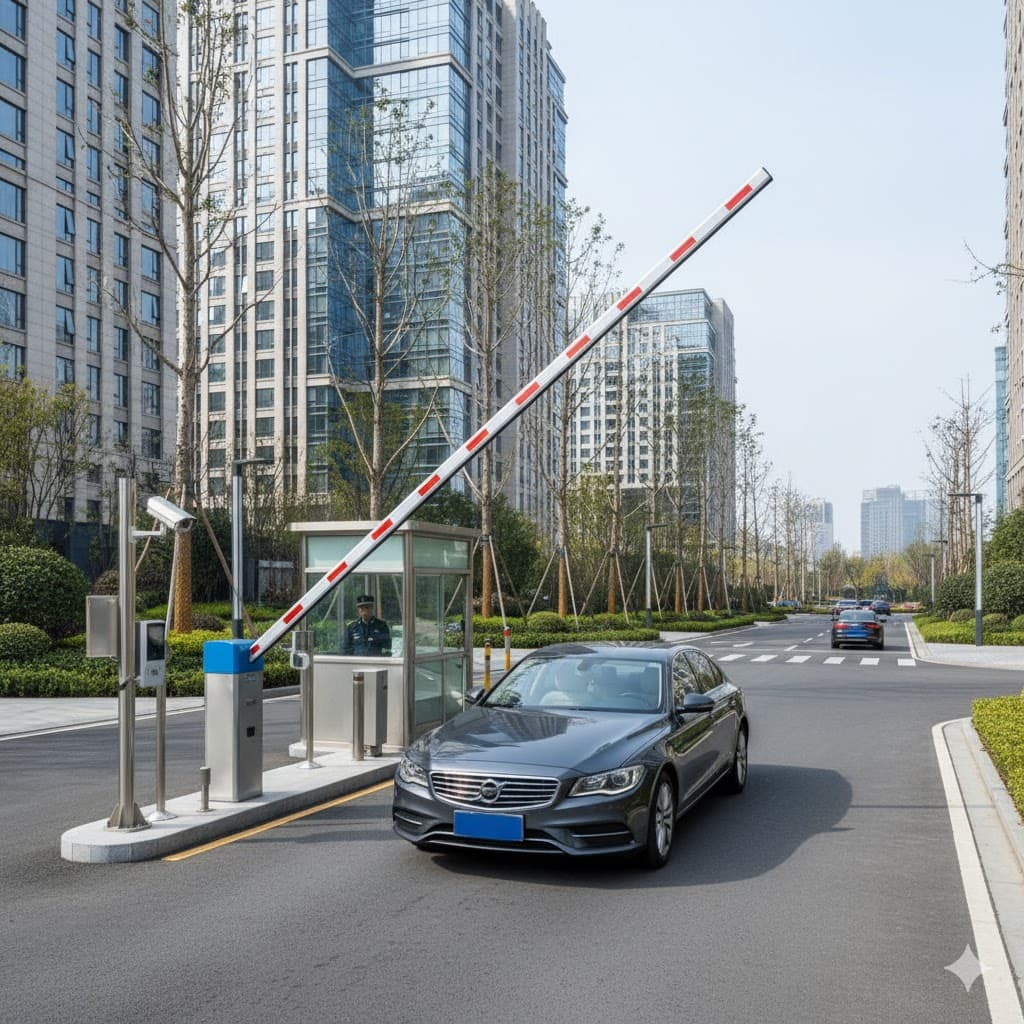
A boom barrier is an automatic arm-gate that controls vehicle entry and exit at a driveway, parking facility or gated site, raising and lowering on command from a remote control, an access card, a long-range UHF tag or an automatic number-plate recognition (ANPR) camera. It is the standard hardware behind virtually every controlled vehicle entrance in the world, from a residential compound gate to a multi-lane commercial parking facility.
TimeWatch Arabia supplies and installs automatic boom barriers across Saudi Arabia, serving shopping malls, gated residential communities, corporate and industrial campuses, hospitals and toll or checkpoint lanes that need reliable, high-cycle vehicle access control.
This page explains what a boom barrier is, how it operates, the features that distinguish a well-specified system, why organisations across the Kingdom choose TimeWatch Arabia, and the questions we hear most often from facilities and security teams evaluating a purchase.
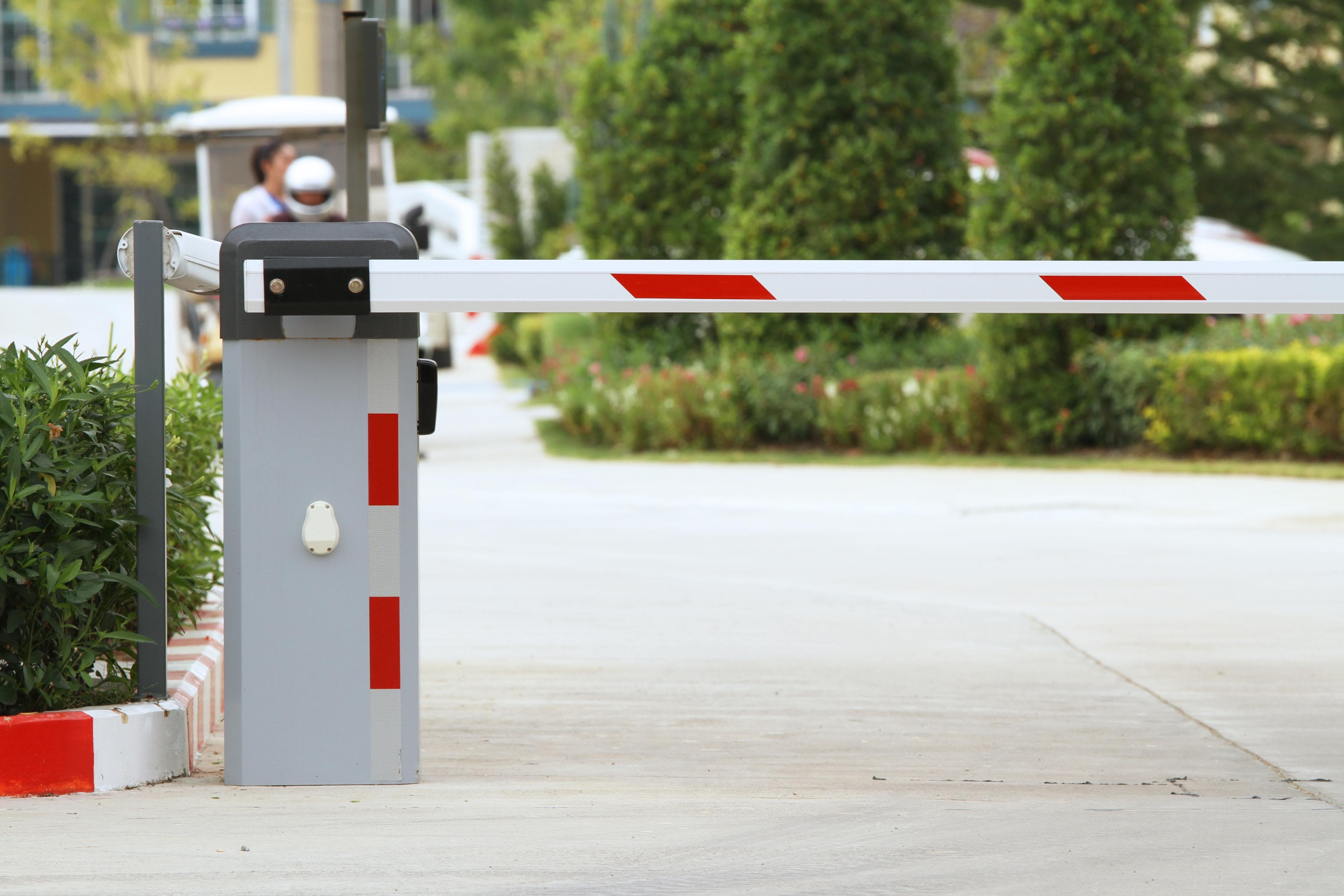
A boom barrier consists of a motorised cabinet housing the drive mechanism, mounted at the side of a driveway or lane, with a horizontal arm — straight, folding, or fitted with a fence-style skirt — that pivots upward to open the lane and back down to close it. The motor is engineered for rapid, repeated cycling, since a busy parking entrance or a gated community's main gate can see the barrier operate hundreds of times per day without any tolerance for slow response or mechanical fatigue.
On its own, a boom barrier is simply a physical gate; its intelligence comes from what triggers it to open. In a basic deployment, that trigger might be a remote control or a push-button at a guard booth. In a modern, automated deployment — which is the standard for any Saudi site handling meaningful vehicle volume — the trigger is an identification system: a long-range UHF tag fixed to a resident or employee's windshield, an ANPR camera reading the vehicle's number plate, or an access card presented at an intercom. TimeWatch Arabia supplies boom barriers configured to work with any of these identification methods, individually or in combination.
The operating sequence is designed to be fast enough that authorised vehicles do not need to stop and wait unnecessarily, while remaining safe for both vehicles and pedestrians moving through the same lane.
As a vehicle approaches the barrier, the identification system — whether a UHF reader detecting a tag from several metres away, an ANPR camera reading the plate, or a card reader at the driver's window — verifies whether the vehicle is authorised. On a positive match, the barrier control unit signals the motor to lift the arm, typically in under two seconds for a standard straight-arm configuration.
The vehicle passes through the now-open lane. A safety loop detector embedded in the road surface, combined with photo-sensors on many installations, detects the vehicle's presence and prevents the arm from lowering while it is still in the barrier's path — a critical safety feature that protects both the vehicle and anyone standing nearby. Once the vehicle has fully cleared the lane, the barrier closes automatically after a configured delay, or immediately once the loop detector confirms the lane is clear.
Every open and close event can be logged by the connected software, along with the vehicle or credential identified, giving facilities management a complete audit trail of vehicle movement through the site, which is particularly valuable for gated communities, corporate campuses and industrial sites needing to account for who entered and when.

Opening speed is one of the most important specifications for any site with meaningful vehicle throughput. TimeWatch Arabia's boom barriers open in under two seconds on standard configurations, keeping traffic moving smoothly even at busy entrances during peak arrival and departure times.

Duty cycle — the number of open-close operations the barrier can sustain per hour without excessive wear — is a critical specification for high-traffic sites such as mall parking or busy corporate campuses, and TimeWatch Arabia specifies barriers rated for continuous, heavy-traffic use rather than lighter-duty units intended for occasional residential use.

Arm type is selected based on the lane's specific requirements: a straight arm suits most standard lanes, a folding arm is useful where overhead clearance is limited or where the arm needs to fold back against a wall in tight spaces, and a fence-style arm with a skirt adds a physical barrier that discourages pedestrians or motorcycles from ducking underneath the raised arm.

Integration with UHF readers and ANPR cameras allows the barrier to operate automatically without requiring a security guard to manually approve every vehicle, which both speeds up entry and reduces staffing requirements at the gate.

Battery backup ensures the barrier remains operational during a power outage, an important consideration for sites that cannot afford their entrance to be blocked or left uncontrolled if the mains supply is interrupted.
TimeWatch Arabia supplies boom barriers as part of a complete vehicle-access product range that includes UHF RFID readers and full parking management solutions, meaning a site can procure a fully integrated vehicle-entrance system — barrier, identification hardware and management software — from a single accountable supplier rather than coordinating separate vendors for each component.
Every installation includes site-specific configuration of opening speed, safety-loop placement and identification method, tailored to the actual traffic pattern and layout of the site rather than a generic default configuration. TimeWatch Arabia's local presence across Saudi Arabia means installation, integration with existing gate infrastructure, and after-sales servicing are all handled by a team familiar with the operating conditions the Kingdom presents — extreme summer heat, dust exposure, and high-cycle usage at busy commercial sites.
As a manufacturer and provider, TimeWatch Arabia can respond quickly when a barrier needs servicing, a new lane needs adding, or an existing installation needs to be upgraded with UHF or ANPR integration, without the delays that come from working through an overseas supplier with no regional support presence.
For organisations comparing suppliers, it is worth asking directly how quickly a vendor can attend a site if a barrier stops working, since a blocked or uncontrolled vehicle entrance is rarely something a facility can leave unresolved for days. TimeWatch Arabia's regional coverage across Saudi Arabia is built specifically to answer that question with a fast, local response rather than a promise routed through a distant regional office with limited on-the-ground capacity.
Shopping malls and commercial parking facilities across Riyadh, Jeddah and other major cities use boom barriers integrated with ticketing or ANPR systems to manage high-volume vehicle flow efficiently.
Gated residential communities rely on boom barriers combined with UHF tags or intercom systems to give residents fast, automatic access while maintaining security for the wider compound.
Corporate and industrial campuses across the Eastern Province and beyond use boom barriers at main and secondary gates to control employee and visitor vehicle access, often integrated with the same access-control system used for pedestrian entry.
Hospitals use boom barriers to manage staff, visitor and emergency-vehicle access separately, ensuring emergency lanes remain unobstructed.
Hotels use boom barriers at guest and service vehicle entrances as part of a broader property security posture.
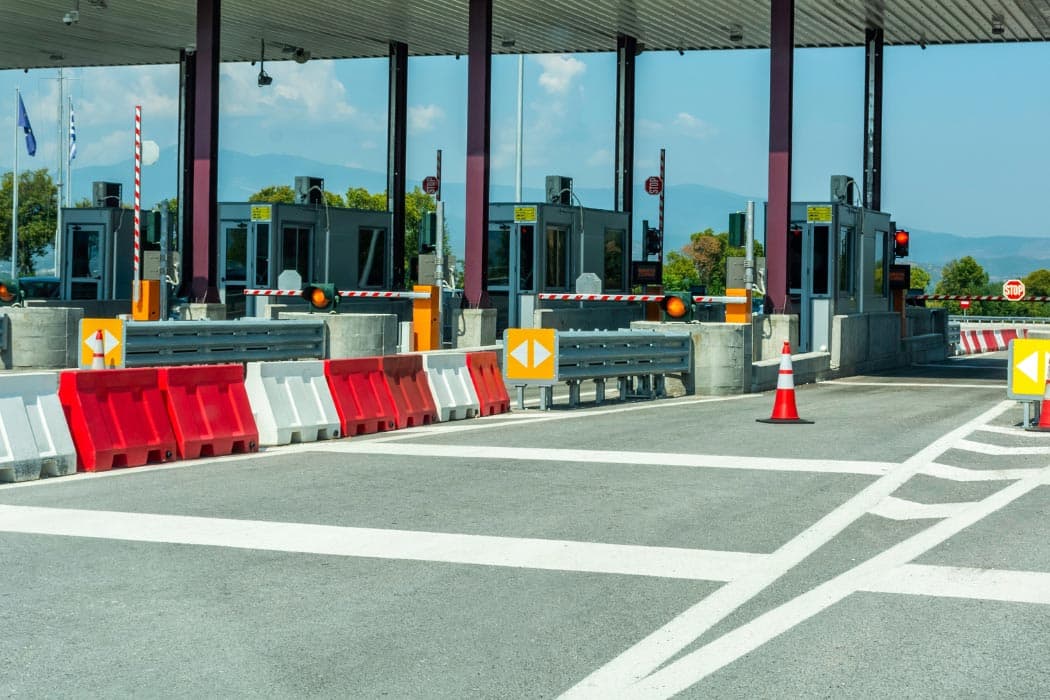
Toll and checkpoint lanes, including those at industrial site perimeters and logistics yards, use high-duty-cycle boom barriers to manage continuous vehicle flow throughout extended operating hours.
TimeWatch Arabia begins every boom barrier installation with a site assessment covering lane width, expected vehicle volume, power availability and the identification method the site intends to use — UHF, ANPR, card or a combination. Based on this assessment, the appropriate arm type, opening speed and duty-cycle rating are recommended.
Installation includes physical mounting of the barrier cabinet, safety-loop installation in the road surface, integration with UHF readers or ANPR cameras where specified, and connection to any parking management software the site is using. Staff are trained on manual override procedures for emergencies and on day-to-day management of authorised vehicle lists.
Ongoing support covers routine servicing of the motor and mechanical components, software updates for connected identification systems, and expansion support as a site adds new lanes or upgrades its identification method over time.
A boom barrier is one of the most heavily cycled pieces of equipment on any site, and its long-term reliability depends as much on the maintenance regime behind it as on the initial hardware specification. Saudi Arabia's climate places particular demands on outdoor equipment: extreme summer heat can affect motor performance and lubricant viscosity, while dust accumulation in the mechanical housing over time can increase wear on moving parts if not addressed through routine servicing. TimeWatch Arabia builds a maintenance schedule into every boom barrier deployment, rather than treating servicing as a reactive, break-fix exercise.
Routine servicing typically covers motor and gearbox inspection, safety-loop testing to confirm the detector is still functioning correctly, and a check of the arm's mechanical balance, since an arm that has drifted out of balance places additional strain on the motor and increases the risk of a fault developing. For sites with very high daily cycle counts — busy mall parking or a corporate campus with continuous shift-change traffic — TimeWatch Arabia recommends a more frequent servicing interval to match the higher mechanical wear these sites naturally experience.
Because TimeWatch Arabia is a manufacturer and provider with a direct presence across Saudi Arabia, replacement parts for worn components are available without the long lead times that can come from ordering through an overseas supplier, meaning a barrier that does develop a fault can typically be back in service quickly rather than leaving a site's entrance uncontrolled or manually staffed for an extended period. Many organisations also begin with a single barrier at a main gate and later extend the same system to secondary gates, visitor lanes or a second site, and TimeWatch Arabia designs each initial installation with that kind of future expansion in mind wherever it is a realistic possibility for the client.
TimeWatch Arabia supplies and installs boom barriers across all regions of Saudi Arabia, including Riyadh, Jeddah, Mecca, Medina, Dammam, Al Khobar, Dhahran, Jubail, Yanbu, Taif, Tabuk, Abha and Buraidah, with local installation and after-sales support wherever your site is located.
Standard arm configurations open in under two seconds, keeping vehicle traffic moving smoothly at busy entry and exit points.
Servicing frequency depends on daily cycle count and site conditions. High-traffic sites such as mall parking typically need more frequent servicing than low-traffic residential gates, and TimeWatch Arabia recommends a maintenance schedule tailored to your site's actual usage pattern.
Yes. Boom barriers integrate with ANPR cameras as well as UHF readers, enabling hands-free, ticketless vehicle access for authorised vehicles.
Yes. Safety loop detectors embedded in the road surface, along with photo-sensors on many installations, prevent the arm from closing on a vehicle or person still within its path.
Battery backup keeps the barrier operational during a power outage, and a manual override mechanism allows the arm to be raised by hand if needed in an emergency.
Yes. Barriers are commonly configured to support automatic identification via UHF or ANPR alongside a manual override option for a guard booth, giving sites flexibility in how access is managed.
Configuration — including arm type, duty-cycle rating and identification method — varies by site, so we recommend contacting TimeWatch Arabia directly for a tailored assessment and quote.
Yes. TimeWatch Arabia provides supply, installation and after-sales support for boom barriers in all major regions of the Kingdom.
Yes. Boom barriers are a core component of TimeWatch Arabia's parking management solutions, combined with UHF or ANPR identification and central software for occupancy tracking and reporting.
Call: +966 53 915 7364
Email: sales@timewatcharabia.com