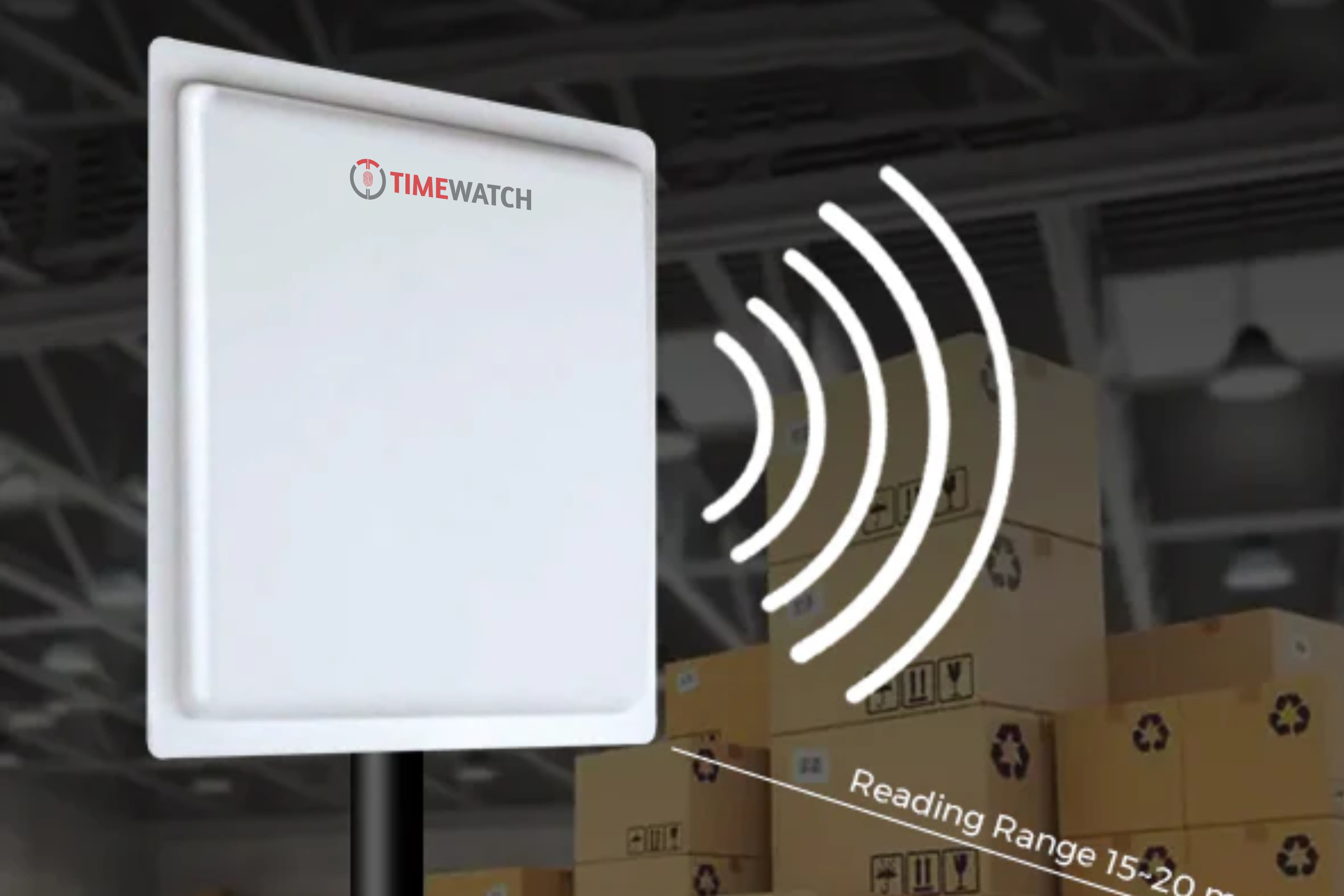
A UHF RFID reader identifies a passive or active radio tag from several metres away using ultra-high-frequency radio waves, enabling completely hands-free vehicle and personnel identification without the driver needing to stop, roll down a window, or present a card to a reader. It is the technology behind the long-range windshield tags that let a resident's vehicle glide through a compound gate, or an employee's vehicle pass into a corporate campus, without ever slowing to a stop.
TimeWatch Arabia supplies UHF RFID readers across Saudi Arabia, serving parking facilities, gated residential communities, corporate and industrial campuses, and logistics yards that need fast, reliable, hands-free vehicle or personnel identification integrated directly with boom barriers and access-control software.
This page explains what a UHF RFID reader is, how it functions within a vehicle-access system, the features that matter for a Saudi deployment, why organisations choose TimeWatch Arabia, and the questions we hear most often from facilities and security teams.
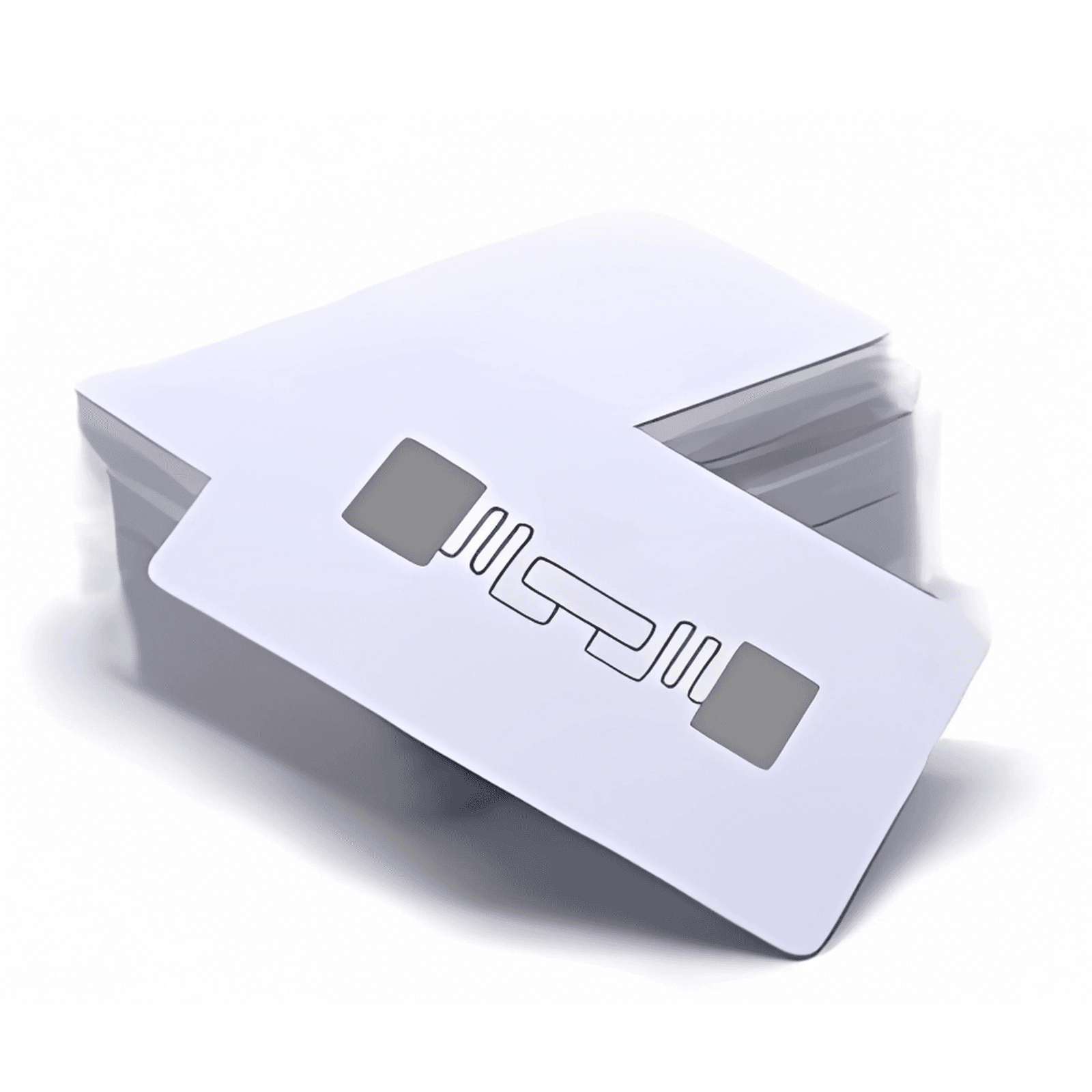
A UHF RFID reader is a device that emits radio waves in the ultra-high-frequency band and listens for the response from a nearby tag, decoding that response into a unique identification number that the connected access-control or parking software can look up against its database of authorised vehicles or personnel. Unlike the short-range, low-frequency RFID technology used in typical building-access cards, which must be held within a few centimetres of a reader, UHF technology operates over a range of several metres, which is precisely what makes it suitable for vehicle identification — a car does not need to stop next to the reader for the tag to be detected.
In a typical deployment, a small passive UHF tag is fixed to the inside of a vehicle's windshield or to a personnel badge. The tag requires no battery of its own; it is energised by the reader's radio signal at the moment of detection, which is why it can remain functional for years without maintenance. As the vehicle approaches a gate, the reader detects the tag well before the vehicle reaches the barrier, giving the access-control system time to verify authorisation and trigger the boom barrier to open just as the vehicle arrives, producing a smooth, uninterrupted approach rather than a stop-and-wait experience.
The detection and access sequence happens quickly enough to feel seamless to the driver, while giving the connected system a precise, auditable record of every vehicle that passes.
As a tagged vehicle approaches the reader's detection zone — typically positioned at the gate or driveway entrance — the reader's radio signal energises the passive tag, which responds with its unique identification code. The reader captures this code and passes it to the access-control or parking software, which checks it against the authorised vehicle database in real time.
On a positive match, the software signals the connected boom barrier to open, timed so the arm is fully raised by the time the vehicle reaches it, allowing continuous, uninterrupted approach and passage. The event — vehicle identity, timestamp and gate location — is logged for reporting and audit, giving facilities management a complete record of vehicle movement through every controlled entrance on the site.
Because detection happens well before the vehicle reaches the gate, UHF readers work reliably even at normal driving speed, which is a meaningful advantage over card-based or intercom-based systems that require the vehicle to stop and the driver to interact directly with the reader.

Read range is the primary specification that determines how early a vehicle is detected before reaching the gate, and TimeWatch Arabia's readers are specified for a long range of several metres, giving the connected barrier ample time to open before the vehicle arrives.

Fast tag identification at driving speed ensures the system keeps up with normal approach speeds rather than requiring vehicles to slow to a crawl for reliable detection.

Direct integration with boom barriers and access-control software is standard, meaning a UHF reader is rarely deployed in isolation — it functions as the identification layer that triggers the physical barrier and feeds data into the reporting system.

Support for multiple tags per vehicle or user group allows organisations to manage different access levels — for example, distinguishing resident vehicles from visitor or delivery vehicles — within the same reader infrastructure.

Weather-resistant construction is essential for outdoor gate installation, where the reader is continuously exposed to Saudi Arabia's heat, dust and occasional heavy rain, and TimeWatch Arabia specifies readers built to withstand these conditions without degraded performance over time.
TimeWatch Arabia supplies UHF RFID readers as an integrated component of its wider vehicle-access product range, including boom barriers and complete parking management solutions, meaning a site can deploy identification hardware, physical barriers and management software as a single coordinated system rather than integrating separate vendors after installation.
Every deployment includes site-specific placement and configuration of the reader to ensure reliable detection range and timing relative to the connected barrier, tailored to the actual approach speed and layout of the site's driveway or gate. TimeWatch Arabia's local presence across Saudi Arabia means installation, tag issuance and after-sales support are handled by a team familiar with the operating conditions the Kingdom presents.
As a manufacturer and provider, TimeWatch Arabia can respond quickly to requests for additional tags as an organisation grows, reader recalibration, or expansion to new gates, without the delay that comes from working through an overseas supplier with no regional presence.
Many organisations also come to TimeWatch Arabia after a first attempt at UHF deployment from another supplier has underperformed — often because the reader was mounted without proper regard for approach speed or vehicle type mix, resulting in inconsistent detection that undermines confidence in the whole system. In these cases, TimeWatch Arabia carries out a fresh site assessment and, where the existing reader hardware is suitable, can often resolve the issue through reconfiguration and repositioning rather than a full hardware replacement.
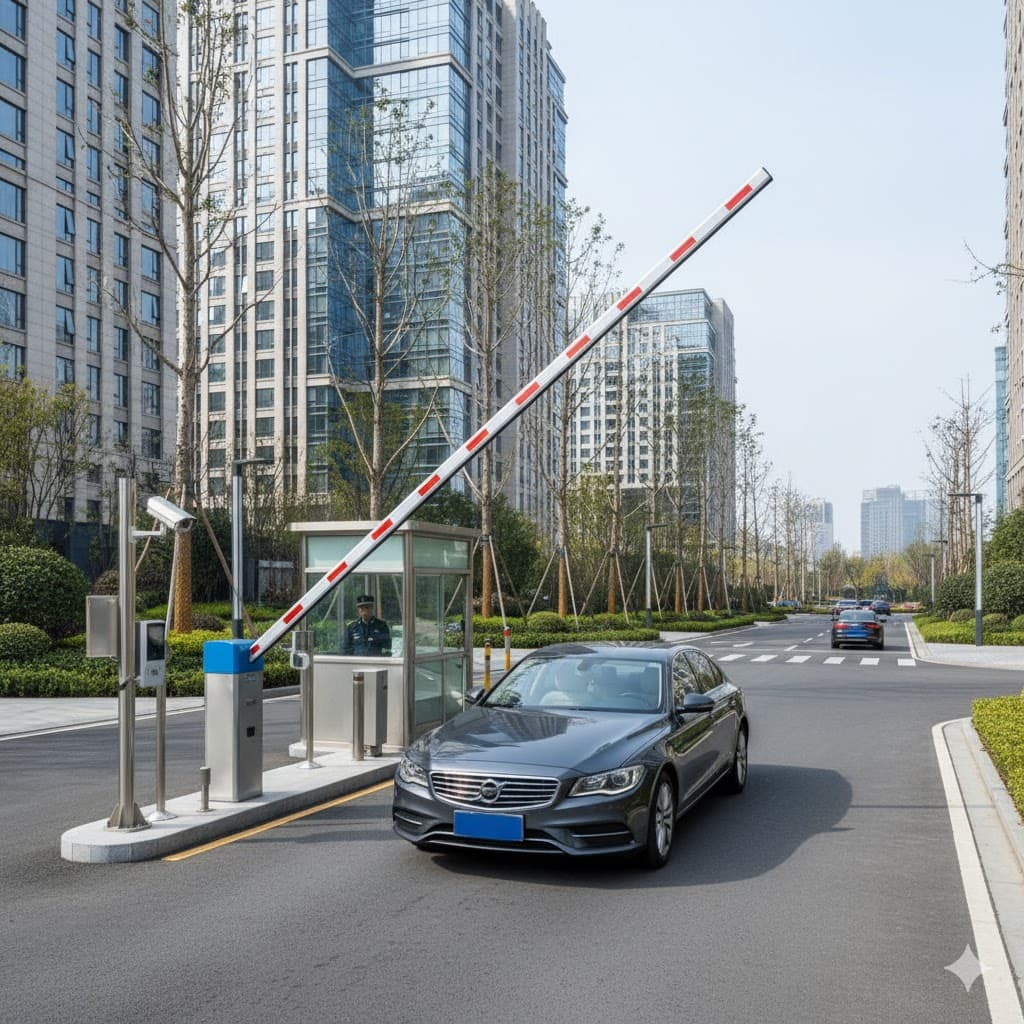
Gated residential communities across Saudi Arabia use UHF readers to give residents fast, automatic gate access without needing to stop at every entry, while still maintaining a complete log of vehicle movement for security purposes.
Corporate and industrial campuses use UHF readers at main and secondary gates to manage employee vehicle access efficiently, often integrated with the same identity system used for building access.
Shopping malls and large parking facilities use UHF readers to speed up entry for registered monthly-pass holders while managing visitor traffic separately through ticketing or ANPR.
Logistics and warehouse yards use UHF readers to identify authorised delivery and freight vehicles automatically, reducing manual checkpoint delays during high-volume periods.
Toll and checkpoint lanes at industrial site perimeters use UHF readers to manage continuous vehicle flow throughout extended operating hours without requiring manual verification of every vehicle.
TimeWatch Arabia begins every UHF reader installation with a site assessment covering gate layout, approach speed, and the number of vehicles or personnel to be tagged. Based on this assessment, reader placement and detection-range configuration are specified to ensure reliable, well-timed detection relative to the connected barrier.
Installation includes physical mounting of the reader, integration with the connected boom barrier and access-control or parking software, and initial tag issuance for the site's vehicle fleet or personnel list. Facilities staff are trained on issuing new tags, deactivating lost or reassigned tags, and reviewing access logs.
Ongoing support covers reader recalibration, software integration updates, and tag issuance support as the organisation's vehicle fleet or personnel list changes over time.
UHF RFID readers are deployed differently depending on what a site actually needs to identify, and understanding these common scenarios helps clarify how the technology fits into a broader access strategy. In a single-gate residential compound, one reader typically handles all inbound vehicle identification, with a second unit for the exit lane, and the emphasis is on issuing and managing tags reliably as residents move in and out over time. In a multi-gate corporate or industrial campus, readers are often deployed at several access points simultaneously, all feeding into one central access-control database, so an employee's single tag works consistently at every gate they are authorised to use.
Placement and mounting height matter more than is often assumed. A reader mounted too low or at an awkward angle relative to typical vehicle approach paths can produce inconsistent detection, particularly for tags mounted on tall vehicles such as trucks or SUVs versus low-profile sedans. TimeWatch Arabia's installation team calibrates reader placement and orientation specifically for the mix of vehicle types expected at each site, rather than using a single default mounting configuration everywhere.
Best practice for tag management is to maintain a clear process for issuing, reassigning and deactivating tags as vehicles or personnel change over time — a stale tag list is one of the most common causes of access-control confusion at sites that have been operating for several years. TimeWatch Arabia's software includes tools for straightforward tag administration, and our training covers this process specifically so facilities teams can keep the authorised list accurate without needing ongoing vendor involvement for routine changes. A further consideration for larger sites is combining UHF identification with a secondary verification method, such as a security guard visually confirming vehicles during unusual hours, since layered verification is often preferred at sites with a heightened security posture even where UHF alone would technically be sufficient for routine daytime access.
TimeWatch Arabia supplies and installs UHF RFID readers across all regions of Saudi Arabia, including Riyadh, Jeddah, Mecca, Medina, Dammam, Al Khobar, Dhahran, Jubail, Yanbu, Taif, Tabuk, Abha and Buraidah, with local installation and after-sales support wherever your site is located.
Long-range UHF readers can detect tags from several metres away, giving the connected boom barrier time to open before the vehicle arrives, enabling smooth, uninterrupted passage.
TimeWatch Arabia's software includes straightforward tools for issuing, reassigning and deactivating tags, and our training covers this process so your facilities team can keep the authorised vehicle list accurate without ongoing vendor involvement for routine changes.
Yes. UHF readers are designed to identify tags fast enough for vehicles approaching at normal speed, avoiding the need for vehicles to slow down or stop for detection.
In most cases, yes. UHF readers integrate directly with boom barriers and access-control software, and TimeWatch Arabia can assess an existing barrier installation to confirm compatibility.
Yes. Passive UHF tags require no battery and are designed for long-term outdoor use on a vehicle windshield without needing replacement or maintenance.
Yes. Support for multiple tags per vehicle or user group allows different access levels to be managed within the same reader infrastructure, such as separating resident, employee and visitor vehicles.
Configuration — including read range, number of tags required and integration with existing barrier hardware — varies by site, so we recommend contacting TimeWatch Arabia directly for a tailored assessment and quote.
Yes. TimeWatch Arabia provides supply, installation and after-sales support for UHF RFID readers in all major regions of the Kingdom.
Yes. UHF readers are a core identification component of TimeWatch Arabia's parking management solutions, working alongside boom barriers and central software for occupancy tracking and reporting.
Yes. UHF tags can be issued on personnel badges as well as vehicle windshields, allowing the same long-range identification technology to support pedestrian access points alongside vehicle gates where required.
Call: +966 53 915 7364
Email: sales@timewatcharabia.com