
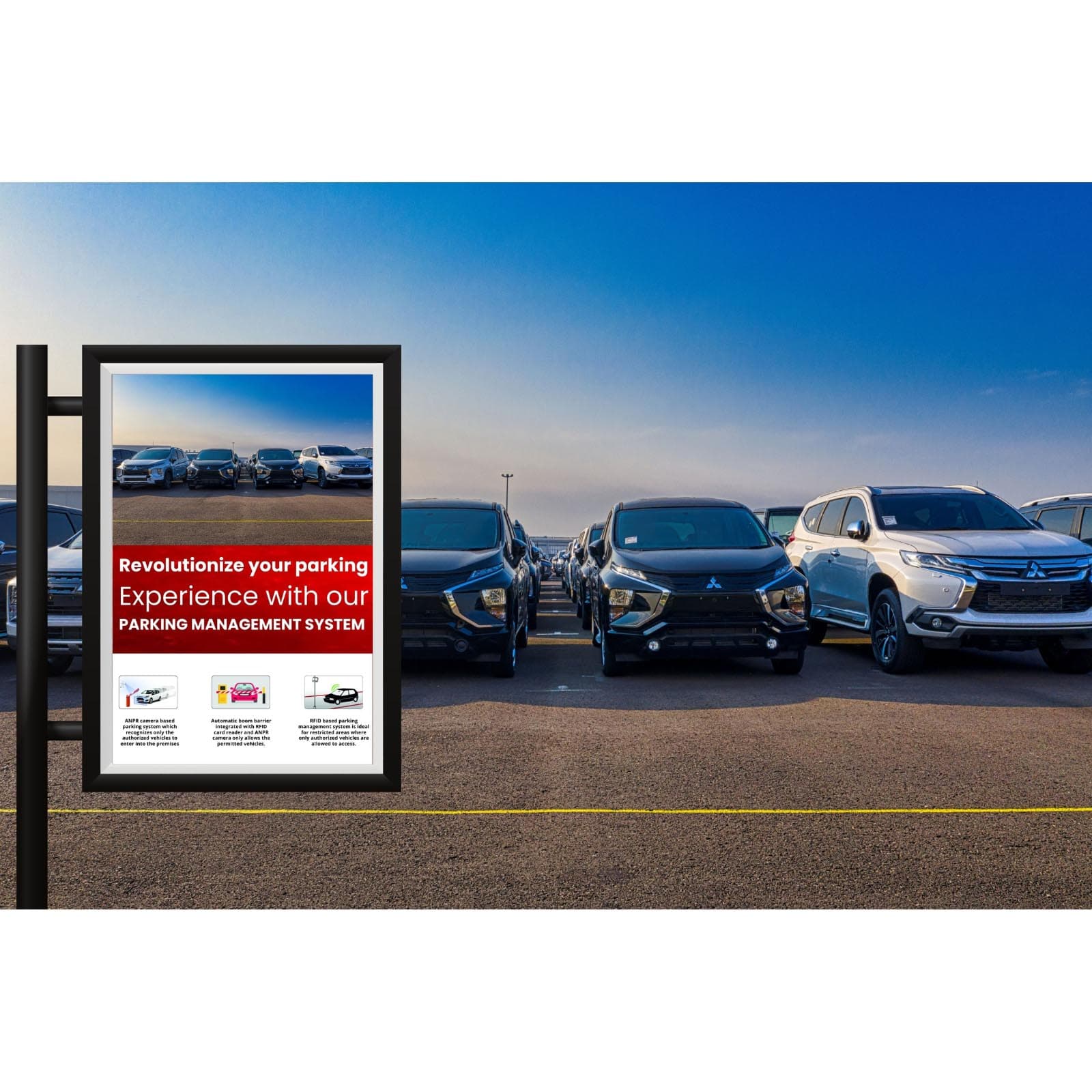
How Does a Parking Management System Work?
What Is a Parking Management System?
The label covers installations of very different scale. A compound in a residential district may need only that resident vehicles pass without stopping and that visitor movements are recorded. A basement under a mixed-use development in a major city adds per-bay sensors, in-aisle guidance, pay-on-foot stations and shift-wise reconciliation. A pilgrim transport staging area may need very little inside the facility and a great deal at the lanes, because its entire problem is throughput rather than wayfinding. The underlying logic is the same in all three; what changes is which optional layers are present.
Two jobs are worth separating at the start, because sites routinely procure one and expect the other. Access control decides who may enter and leave, and records it. Space management knows how many bays are free and tells drivers where they are. A system can do the first without the second, and doing the second properly requires considerably more infrastructure running through the structure.
How Does a Parking Management System Work?
A parking management system works as a closed loop around each vehicle's visit. At entry, an inductive loop detects the vehicle, a reader identifies it, the software validates that identity against its permitted list or creates a new entry record stamped with the time, and the barrier opens. The occupancy counter increments. Inside, guidance displays and bay sensors direct the driver to a free space where that layer exists. At exit the vehicle is identified again, the duration is computed from the two timestamps, settlement is applied where it applies, the exit is validated, the barrier opens, the counter decrements, and the completed transaction is logged.
Everything else on this page (slot sensors, guidance signage, user categories, surge behaviour, reporting) hangs off that loop. Read the loop once and the rest of the page is detail attached to a stage of it.
Main Components of a Parking Management System
| Component | Function |
|---|---|
| Entry station | Pedestal at the entry lane holding the reader, ticket dispenser, intercom and indication lights. |
| Exit station | Equivalent unit at the exit, holding the reader or ticket slot, a payment terminal where fitted, and an intercom. |
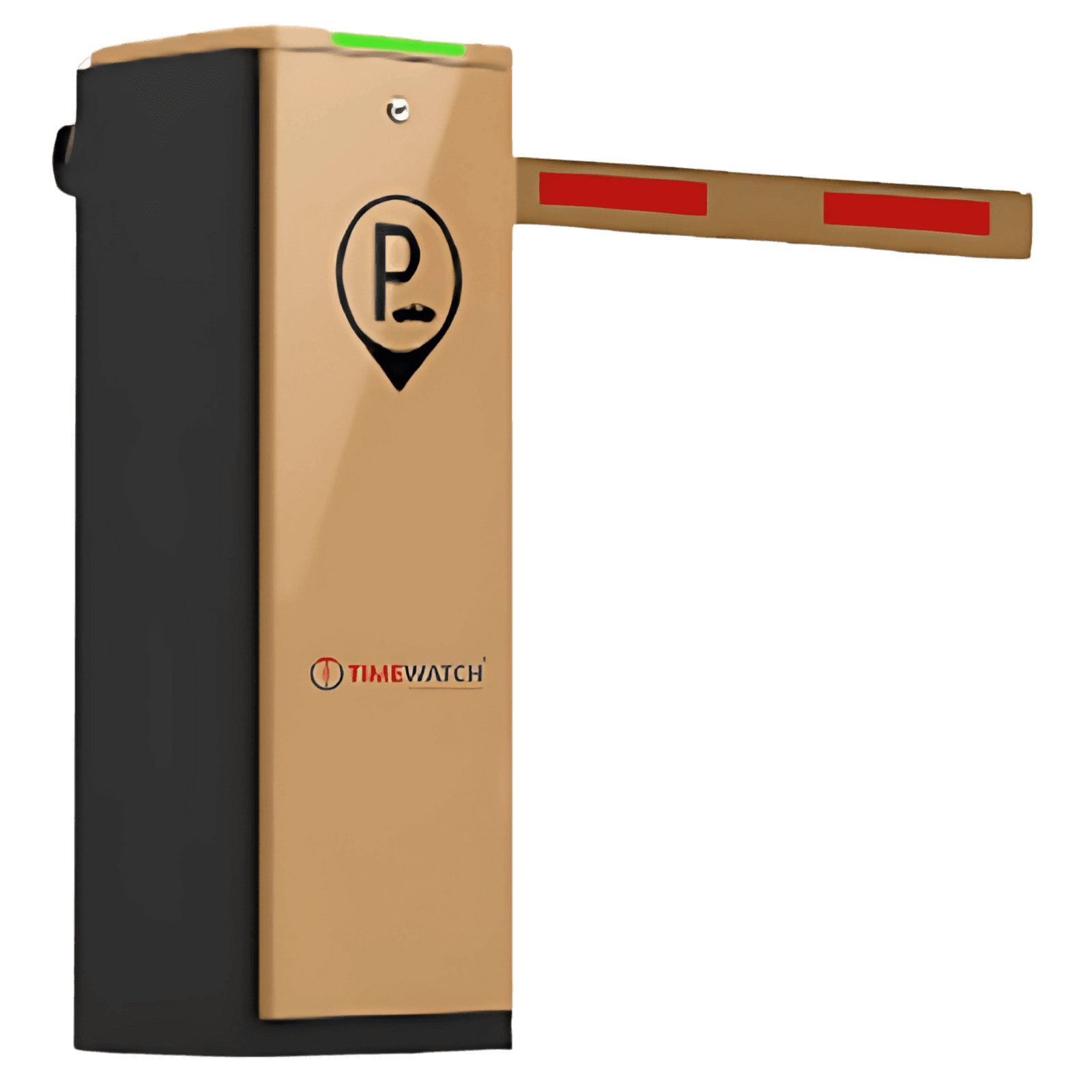
| Boom barriers | The physical gate at each lane, raised on a valid authorisation and lowered once the vehicle has cleared. |
| Inductive loop detectors | Wire loops cut into the road surface that sense vehicle presence, arming the reader, preventing the barrier closing on a vehicle, and confirming passage. |
| UHF RFID readers | Long-range readers that identify a windscreen tag while the vehicle is still approaching the lane. |
| Plate recognition cameras | Infrared-illuminated cameras that read the number plate and convert it to text for matching, or for recording against the entry event. |
| Ticket and token dispensers and readers | Issue a printed ticket or a reusable token at entry and read it back at exit or at a payment station. |
| Payment terminals and pay-on-foot stations | Where a casual user settles, either in the lobby before returning to the vehicle or at the exit lane itself. |
| Slot occupancy sensors | Ultrasonic sensors above each bay, or magnetic sensors in the floor, detecting whether that individual bay is occupied. |
| Guidance displays and signage | Free-space counter at the entrance, in-aisle displays by direction, and per-bay indicator lights on sensor-equipped sites. |
| Central server and software | Holds the user database, the charging rules, the occupancy state and the transaction history, and runs the reporting engine. |
| CCTV | Cameras covering lanes, payment points and aisles, with footage bookmarked against transactions for review. |
| UPS and power backup | Keeps lanes, readers and the server running through an outage so occupancy state is not lost and vehicles are not stranded in an enclosed structure. |
Entry and exit stations
The station is where throughput is won or lost. A well-designed one places the reader so it sees the vehicle early, puts the dispenser at a height reachable from a car window and from a delivery motorcycle, and gives unambiguous indication so no driver waits wondering whether the system responded at all. In this climate there is an additional consideration that temperate specifications never raise: every second a driver spends with the window down at an entry station in July is a second of discomfort, and it shows up directly in how quickly drivers transact. Identification methods that keep the window closed are worth more here than the engineering comparison alone suggests.
The intercom must reach a point that is genuinely attended. It is the escape route for every case the automation does not cover, and on a large facility it is used far more often than the design assumed.
Detection and identification devices
Detection and identification are different jobs and are frequently confused in tender documents. Detection answers "is a vehicle here" and is almost always an inductive loop, whose inductance shifts when a metal mass sits over it. Identification answers "which vehicle is it" and is done by an RFID reader, a plate recognition camera, a ticket, or a person. The loop arms the identification step, which is why a lane with a healthy reader but a damaged loop presents as completely dead and sends technicians to the wrong device.
Slot sensors, guidance displays and signage
Slot sensors are optional and represent the single largest infrastructure decision in a parking project. An ultrasonic sensor above the bay measures the distance to the floor and reports occupied when that distance shortens. A magnetic sensor detects the disturbance a vehicle's mass causes in the local magnetic field. Either reports bay-by-bay state to the server, which drives the aisle displays and the bay indicator lights. Without them a site can still show a free-space count at the entrance, but it derives that number by arithmetic rather than by observation, a distinction that matters more than it sounds, and which has its own section below.
Server, software and supporting infrastructure
The software holds the permitted-user list, the categories users belong to, the rules for each category, the live occupancy state and the transaction history. The supporting infrastructure (cabling to each lane, switches, surge protection, earthing and the UPS) is unglamorous and determines dependability. Long outdoor runs to entry stations and cameras are exposed to induced surges, and in dry desert conditions to static build-up as well; both are common causes of the intermittent lane faults that get blamed on software.
How Does a Parking Management System Work Step by Step?
| Step | What happens | How it works |
|---|---|---|
| 1 | Vehicle arrives at the entry lane | The driver reaches the entry station. Nothing has been recorded yet. |
| 2 | Vehicle is detected | An inductive loop under the approach senses the vehicle's metal mass and signals the controller, which arms the reader. |
| 3 | Vehicle is identified | A UHF RFID windscreen tag is read at range, a plate recognition camera reads the plate, or a ticket or token is issued to a casual user. |
| 4 | Identity is validated, or an entry record is created | A tagged or recognised vehicle is checked against the permitted list and its category. For a casual user no list check applies, the software opens a transaction stamped with the entry time, the lane and the ticket number. |
| 5 | Barrier opens | The controller drives the boom arm to vertical. Where plate recognition is fitted, the plate image is stored against the transaction whether or not it granted the entry. |
| 6 | Occupancy counter increments | The software adds one to the occupied count for the facility or for the zone that lane feeds, and updates the entrance display. |
| 7 | Vehicle clears and the barrier closes | A safety loop under the arm and, where fitted, a photocell across the lane confirm passage before the arm lowers. |
| 8 | Driver is guided to a space | On sensor-equipped sites, aisle displays show free counts by direction and bay indicator lights show individual availability. Elsewhere the entrance counter and static signage are all the driver gets. |
| 9 | Bay state changes | When the vehicle parks, that bay's sensor changes state, its indicator turns red, and aisle and entrance counts update. |
| 10 | Vehicle arrives at the exit lane | An exit loop detects it and arms the exit reader. |
| 11 | Vehicle is identified again | The tag is read, the plate is read, or the ticket is presented. This is what links the exit to the open entry record. |
| 12 | Duration is computed | The software subtracts the entry timestamp from the current time to obtain the stay duration for that transaction. |
| 13 | Settlement is applied where it applies | Depending on configuration, a casual user has already settled at a pay-on-foot station or settles at the exit terminal. Monthly and validated users pass without a settlement step. |
| 14 | Exit is validated | The software confirms the transaction is complete and that no unsettled time remains. Only then is the open command issued. |
| 15 | Barrier opens and occupancy decrements | The exit arm rises, the vehicle leaves, the occupied count reduces by one, and the displays update. |
| 16 | Transaction is logged | Identity, category, entry and exit times, lane, duration, settlement status and plate images are written to the database for reporting and audit. |
Steps 8 and 9 exist only on sites with slot-level detection. Steps 13 and 14 collapse to nothing where no charging applies, which covers most ministry compounds, staff car parks at industrial facilities and many mosque and institutional facilities. The irreducible core of the cycle is steps 2 to 7 and 10 to 16.
How Vehicles Are Identified at Entry and Exit
UHF RFID tags for regular users
For vehicles that arrive every day (residents, staff, monthly permit holders, contractor fleets with standing access) UHF RFID is the usual method. A passive windscreen tag carries an identifier and no battery. The reader's antenna radiates RF energy, the tag harvests enough of it to power its chip and reflects back its identifier. Read ranges of several metres mean the vehicle is identified while still approaching, so the barrier is already moving when the driver arrives and the window stays closed.
Two installation details determine whether this works in practice. Tags must be fitted consistently, because metallised and heat-reflective windscreen glass (very common on vehicles specified for this climate) attenuates the signal, and many such windscreens carry a designated un-metallised patch that the tag must sit within. Antenna aim matters just as much: a beam pointed too wide reads the adjacent lane and opens the wrong barrier, which at a multi-lane entrance produces a fault that looks random until somebody measures the read zone.
Plate recognition as a backup identity
Plate recognition uses an infrared-illuminated camera and optical character recognition to locate the plate in the frame, segment the characters and convert them to text. That text can be matched against a permitted list, or simply stored against the transaction.
The second use deserves far more attention than it usually receives. Plate recognition earns its place in a parking system most reliably as a backup identity rather than as the primary one. When a ticket is lost, a tag fails to read, or a transaction is disputed at the exit with vehicles queued behind, the plate captured at entry is what reconstructs the record and resolves the case in seconds. Designed in as a quiet reconciliation layer behind the ticket or the tag, it makes the lane resilient. Designed in as the sole reader, it inherits every plate condition on the road (damaged, dirty or obscured plates, decorative frames, plates on delivery motorcycles at awkward angles) and those problems now sit in the path of every vehicle rather than in a fallback used occasionally. In this region there is an additional reason to treat it as a backup: a plate carrying a film of fine dust after a windy afternoon is a harder read than the same plate was that morning, and that condition arrives without warning.
Tickets and tokens for casual users
Visitors cannot be issued tags, so public facilities issue a printed ticket carrying a barcode or QR code, or a reusable token carrying an RFID chip. Either way the medium is a handle onto a record held in the database rather than a store of information in itself, the entry timestamp lives on the server, not on the paper.
The choice between the two has a climatic dimension here. Tokens are reusable, carry no consumable, and are unaffected by the heat inside an entry pedestal standing in direct sun. Printed tickets carry a human-readable entry time, which reduces disputes at the exit, but they bring thermal media into an environment that is hostile to it, a point developed in the environmental section below. High-volume facilities with long summer operating hours frequently settle on tokens for that reason alone.
Attended handling and overrides
Every automated lane needs an attended path: a supervisor console with an override, an intercom that reaches a person who is actually there, and a documented procedure setting out what that person may do and what they must record. These are not admissions of failure. They are the parts of the system that handle what automation does not, and a facility that omits them ends up with attendants improvising, which is worse in every respect, including audit.
Ticket, RFID and Plate Recognition Compared
| Aspect | Ticket or token | UHF RFID tag | Plate recognition |
|---|---|---|---|
| User type suited to it | Casual visitors and shoppers with no prior relationship to the facility | Regular users, residents, staff, monthly permit holders, fleets | Mixed traffic; pre-registered vehicles, and any vehicle whose plate must be recorded |
| Identification speed | Slowest, the vehicle stops while the driver opens a window, presses a button and takes the medium | Fastest, identification completes at several metres while the vehicle is still approaching | Fast on a clean capture, but the plate must face the camera squarely, usually at low speed |
| Driver interaction required | Stop, take the ticket, retain it, present it again at exit or at a payment station | None, the driver neither stops nor lowers a window | None in principle, though drivers tend to slow at the capture point |
| Typical failure modes | Lost or damaged media; media exhaustion at the busiest hour; dispenser jams; queues at the button | Tag missing, damaged, or sitting on metallised glass; cross-lane reads from a wide beam; tag moved between vehicles | Plate damaged, dirty, dust-filmed or obscured; poor angle or height; glare, low sun or night illumination; motorcycle plate position |
| Infrastructure needed | Dispenser with consumables or a token circulation stock, exit reader or payment station, loop, barrier | Long-range reader and antenna per lane, tags issued and registered per vehicle, loop, barrier | Camera with IR illuminator per lane, correct mounting geometry, recognition software, image storage, loop, barrier |
| Behaviour in Saudi conditions | Tokens are indifferent to heat; printed media is not. Dispenser cabinets in direct sun need shading and thermal attention | Typically the most suitable method for daily traffic here, because the window stays closed and no media is exposed to the environment | Needs a cleaning interval for the camera window and realistic expectations after dust events; strongest as the reconciliation layer |
Most working facilities are not one of these three but a combination: RFID for daily users, tickets or tokens for everyone else, and plate recognition across both as the record that ties a disputed transaction to a real vehicle. The table is a guide to which method should carry which stream of traffic, not a single choice for the whole facility.
How Occupancy Is Measured: Counting vs Slot-Level Detection
There are two ways a system can know how full it is, and they are not equivalent. A facility that specifies one while expecting the behaviour of the other will be disappointed, usually about three weeks after handover.
Entry-minus-exit counting
Counting derives occupancy arithmetically. The software starts from a known capacity, adds one on every validated entry, subtracts one on every validated exit, and displays the difference. It needs no hardware beyond the lanes themselves, works from day one, and scales to any size of facility. Its limitation is that it never observes a bay: it knows a total and nothing else, not which level has space, not which aisle, not whether a bay is blocked by a stored trolley or a parked maintenance vehicle. It cannot drive meaningful in-aisle guidance and it cannot produce bay-level data.
Slot-level occupancy sensors
The richer approach puts a sensor on every bay so the server knows the true state of each one. That unlocks what counting cannot do: per-bay indicator lights, in-aisle free counts by direction, reserved-bay enforcement, and reporting on which parts of the facility are actually used. The trade-off is infrastructure, every bay needs a sensor, power and a data path running through the whole structure, which is straightforward in a basement being built and awkward in one that is already operating. Slot sensors make most sense in enclosed multi-level structures under malls and mixed-use developments, where a driver genuinely cannot see the next level, and much less sense in open surface parking where the whole area is visible from the entrance.
| Aspect | Entry-minus-exit counting | Slot-level sensors |
|---|---|---|
| What it measures | A single total derived from lane events | The true state of each individual bay |
| Accuracy over time | Drifts as miscounts accumulate; needs scheduled reconciliation | Self-correcting, each sensor reports its own bay independently |
| Guidance capability | Entrance free-space count only | Entrance count, in-aisle directional counts, per-bay lights |
| Reporting available | Entries, exits, totals, durations | All of the above, plus bay-level utilisation and dwell patterns |
| Infrastructure required | Only the lane equipment already present | A sensor, power and data path at every bay |
| Typically suited to | Compounds, staff car parks, open surface parking, smaller commercial facilities | Enclosed multi-level structures with high turnover and poor sightlines |
Why occupancy counts drift
This is the behaviour most specifications ignore and every operator eventually discovers. A counting-based figure is only as good as the events feeding it, and those events are never perfect. A vehicle tailgates through on one authorisation and an entry goes uncounted. A barrier is held open for a delivery convoy or during a surge and a run of vehicles passes with no events at all. A delivery motorcycle crosses a loop tuned for cars, falls below the detection threshold, and enters unrecorded but is recorded on exit, or the reverse. Each error is small, none of them self-corrects, and they do not reliably cancel out.
Over a day the count may be off by a handful. By the end of a week it can be wrong enough that the entrance sign reports free spaces in a facility that is full, or reports full while an upper deck stands empty. What follows is entirely predictable: drivers stop believing the display, staff stop referring to it, and the facility quietly reverts to an attendant waving vehicles in, which is the situation the system was bought to replace.
The remedy is procedural rather than technical. A counting system needs a scheduled reconciliation: either a reset to zero at a time when the facility is genuinely empty, which for most sites means overnight, or a physical count of the levels against the system figure at a defined interval with the software adjusted to match. Facilities that build this into the operating routine keep a display people trust. Slot-sensor systems do not have the problem at all, because a missed lane event affects nothing, and that self-correcting property is a stronger argument for slot sensors than the guidance lights usually cited in their favour.
How Parking Guidance Systems Work
Guidance converts occupancy data into something a driver can act on, at three levels of granularity.
- Entrance display: a sign showing the number of free spaces, often with a simple full or space indication. This is the minimum, and the only level available to a counting-based system. Its value is preventing a driver entering a facility that has nothing to offer, which during a surge is worth considerably more than it sounds.
- In-aisle directional displays: signs at junctions showing free counts left and right, or by zone and level, driven by slot sensors aggregated into groups. These are what actually reduce circulation time. The groups must match how drivers decide at each junction, not how the cabling happened to run.
- Per-bay indicator lights: an LED above each bay, green when free and red when occupied, driven by that bay's sensor. Colours also flag reserved, accessible and electric-vehicle bays.
Guidance only helps where the driver has a real choice to make. A single-level open area with two aisles does not need in-aisle displays. A four-level structure under a development, where a wrong decision at the first ramp wastes several minutes, is where the layer repays its infrastructure.
Designing for Concentrated Arrival Surges
This is the characteristic Saudi parking problem, and it is not the same problem as high annual volume. A number of facilities in the Kingdom (mosque and pilgrim facilities around Makkah and Madinah above all, but also stadiums, exhibition venues and large retail developments at peak hours) receive a very large share of their daily traffic inside a short, predictable window. Prayer times, pilgrimage seasons and event schedules produce arrival patterns that would be considered extreme in most markets and are routine here.
A surge changes which parts of the design matter. Average throughput becomes almost irrelevant; what governs is how many vehicles the entry lanes can clear per minute at the peak, and whether the queue that forms behind them has somewhere to stand that is not a public road. Several consequences follow, and they are worth settling at design stage rather than after the first season:
- Size the entry and exit lanes from separate profiles. Arrival and departure are not mirror images. Arrivals at a mosque facility spread across a wider window than departures, which can be close to simultaneous. A facility with adequate entry capacity and inadequate exit capacity presents as a car park that works perfectly until everyone wants to leave.
- Design the fastest identification method onto the surge traffic. A ticket transaction that takes a few extra seconds per vehicle is invisible on a normal day and decisive at the peak, because the delay multiplies by every vehicle in the queue behind. Where a facility serves a recurring population, tags for that population remove the transaction from the critical path entirely.
- Accept that lanes will be held open, and plan for what that does to the count. During a genuine surge, operations staff will raise barriers and wave vehicles through, and they are right to do so, holding an arm cycling at full rate during a peak is both slower and harder on the equipment. But every vehicle that passes an open barrier is an uncounted entry, so a facility that experiences surges must treat occupancy reconciliation as a scheduled operational task rather than an optional one.
- Specify the barrier duty for the peak rate at the summer ambient, not for the daily average. A barrier's permissible cycle rate is a thermal rating quoted against a reference ambient temperature, and it falls as the surrounding air gets hotter. A unit chosen on a daily average figure will reach its thermal cut-out during exactly the hour it is most needed.
- Stage and meter rather than admit everything at once. Large facilities handle surges by holding vehicles at a controlled release point and feeding them into the facility at the rate it can absorb, which keeps the internal circulation moving and keeps queues off the approach roads. This is a traffic-management decision that the parking system supports through zone counts and lane control rather than one it makes on its own.
- Exercise the whole installation before the season, not at the start of it. Equipment that has stood idle through a quiet period and is then asked for sustained peak duty is where failures appear. A pre-season commissioning check that fully cycles barriers, dispensers, readers, cameras and the UPS is worth more than any number of calendar-scheduled visits.
The common thread is that a surge-driven facility should be specified on its peak minute and its exception handling, because on an ordinary afternoon almost any system looks adequate.
How Heat and Dust Affect Parking Equipment in the Kingdom
The mechanism described above does not change in Saudi Arabia (physics is physics) but the operating envelope around it does, and parking equipment is unusually exposed because so much of it stands outdoors at the lanes while the rest sits in a structure that may or may not be ventilated.
Heat inside equipment cabinets
Summer shade temperatures across much of the Kingdom sit above 45 °C, and inland sites regularly approach or pass 50 °C. Inside a dark pedestal or cabinet in direct sun, the air around the electronics is hotter still. Three things follow. Barrier motors shed less heat per cycle, so the permissible cycle rate falls below the catalogue figure quoted at a temperate reference ambient. Embedded controllers and single-board computers in entry stations throttle or reset when their internal temperature climbs, which presents as a lane that becomes unreliable in the afternoon and recovers by morning, one of the harder faults to diagnose if the cause is not already in mind. And UPS batteries lose both capacity and service life as temperature rises, so backup sized on a nominal figure will not hold the lane up for as long as the design assumed.
The responses are mostly architectural and nearly all free of exotic technology: shade the pedestal under a canopy rather than leaving it in open sun, choose a light-coloured housing finish over a dark one, keep ventilation paths genuinely clear rather than pressing the cabinet against a wall, locate the server in a conditioned room rather than a plant space that merely has a fan, and size the UPS battery against the site's summer temperature rather than its nominal rating. Each of these has to be decided before the plinth is poured, because none of them is retrofittable at reasonable disruption.
Ticket media and printed media in summer
This is the detail that temperate specifications never raise and that Saudi operators discover in their first July. Thermal paper develops its image by heating a coating; the same coating darkens when the paper itself gets hot. A roll held in a dispenser standing in direct sun can discolour, and a ticket left on a dashboard behind a windscreen for a few hours in summer can darken to the point where its barcode no longer scans at the exit, producing a customer with a ticket that the system treats exactly as if it were lost. Printed media also becomes brittle and curls, which contributes to dispenser jams, and the jams tend to occur at the busiest hour because that is when the mechanism is working hardest.
The practical options are to shade and thermally manage the dispenser cabinet, to specify media rated for the actual storage and use temperature rather than a general-purpose grade, to keep spare rolls somewhere conditioned rather than in a lane cupboard, or (the choice many high-volume Saudi facilities make) to use reusable RFID tokens instead, which have no coating to darken, no roll to exhaust and no print mechanism to jam. Where printed tickets are retained for customer-facing reasons, plate recognition running behind them stops a darkened barcode from becoming an exit-lane dispute.
Dust on plate-reading cameras and slot sensors
Airborne sand and dust is the dominant wear and reliability mechanism for parking equipment in this region, and it attacks the optical and sensing devices first.
- Plate recognition camera windows. A film of fine dust on the camera window or the infrared illuminator scatters light and reduces contrast, and recognition rates fall gradually rather than failing outright, which is why the decline is usually noticed only when somebody reviews the exception report. Specify a hood or shade for the camera window, and set a cleaning interval from the site's exposure rather than from a generic schedule.
- Slot sensors in open-air and semi-open facilities. An ultrasonic sensor works by timing a reflected pulse; dust accumulating on the transducer face attenuates both the emitted pulse and the return, and a heavily loaded sensor can report an empty bay as occupied or fail to clear when a vehicle leaves. Either error quietly corrupts the guidance a driver is being given. Magnetic sensors are indifferent to surface dust, which is a genuine argument for them in open-air and roof-deck areas where ultrasonic devices would need frequent attention.
- Ventilation and enclosures. Dust in vents and filters directly reduces the airflow the thermal design assumed, which compounds the heat problem above: a cabinet that was adequately specified on day one quietly loses margin as its vents load up, and the first symptom is a thermal fault at peak hour. The solid-particle digit of an enclosure's ingress protection rating matters more here than in a temperate climate, and it only means anything if the cabinet is commissioned with its door closed and its glands fitted properly.
- Loops and road-embedded components. Loop sealant must stay flexible at road surface temperatures that run far above air temperature. A sealant that cures hard cracks and admits water and grit; one that softens migrates out of the slot and leaves the wire exposed. Where heavy vehicles brake and turn on softened asphalt, the resulting movement works the loop wire and produces an intermittent fault that behaves differently in the afternoon than at dawn.
After a significant dust event, an additional inspection is justified regardless of where the site sits in its schedule. Camera windows, sensor faces, vents and barrier photocell lenses are the items to check first, and all four take minutes.
Coastal humidity and salt at Red Sea and Gulf sites
Inland and coastal facilities are different corrosion environments and specifying them identically is a mistake in both directions. Inland, at Riyadh or Tabuk, the air is dry, corrosion is slow, and the dominant problems are heat and abrasive dust. Along the Red Sea coast at Jeddah and Yanbu, and along the Arabian Gulf at Jubail, Dammam and Al Khobar, humidity is high for much of the year and the air carries salt aerosol. Salt is hygroscopic: it draws moisture from humid air and holds a conductive film against metal long after any visible wetting has gone.
For outdoor parking equipment at a coastal site that means hot-dip galvanised or duplex-coated housings for pedestals and barrier cabinets rather than a bare powder coat over mild steel, stainless fasteners of an appropriate grade, sealed cable glands and marine-suitable conduit, foundation detailing that drains rather than ponds, routine fresh-water rinsing of housing exteriors, and conformally coated control boards where the equipment will be exposed. Camera and sensor housings deserve the same attention, because a corroded gland on an outdoor camera admits moisture to the one device whose output nobody checks daily.
How Different User Categories Are Handled
The software divides users into categories, and the category determines what happens at each lane. The set below is typical of Saudi facilities, though which categories a platform supports and how finely their behaviour can be configured varies considerably between software.
- Monthly and permanent users: identified by a registered UHF RFID windscreen tag, validated against the permitted list at both lanes, passing without a ticket, a settlement step or any driver interaction. Entry may be refused outside permitted hours or once a zone quota is reached, depending on configuration.
- Casual visitors: issued a ticket or token at entry with the plate recorded alongside. An open transaction is created; at exit the duration is computed and settlement applies where the facility charges.
- Validated customers of a tenant: an entry ticket stamped or scanned at a tenant's validation terminal, flagged as validated for a configured period so the exit lane releases the vehicle without a settlement step. The record retains which tenant validated it, which is what makes tenant-wise reporting possible in a mixed-use development.
- Reserved bay holders: a tag linked to a specific bay or bay group, admitted regardless of general occupancy because their space is held. On slot-sensor sites an alert can be raised when an unauthorised vehicle occupies the bay.
- Priority and official vehicles: a tag with a priority flag or a registered plate, admitted without occupancy checks and typically without a settlement step. Movements are still logged, which matters for audit on a ministry or government compound even where nothing is charged.
- Service, delivery and contractor vehicles: a temporary tag, ticket or plate registered for a defined window, usually restricted to specific lanes, zones or hours. Time-bounded authorisation that expires automatically is what stops temporary access quietly becoming permanent on a large facility with rotating contractors.
- Emergency vehicles: at hospitals and medical cities this is a category in its own right, with priority opening, a dedicated approach where the layout allows it, and an absolute requirement that a failed barrier never blocks the route. The behaviour should be specified and tested, not assumed from a general priority flag.
- Delivery motorcycles: handled through a dedicated lane with its own detection and timing wherever volumes justify it, for the reasons set out under installation considerations.
The categories a facility will need should be listed during design rather than discovered during operation, because retrofitting a category structure onto a live installation means reissuing tags to everyone affected.
How Duration and Settlement Are Handled
Where a facility charges, duration is the basis. The entry timestamp is written when the transaction opens; at exit the software subtracts it from the current time and applies the configured charging rules, free periods, rounding, category exemptions, tenant validations. What is worth explaining is not the arithmetic but the layout choice and the failure case.
The layout choice is where settlement happens. In pay-on-exit, the driver settles at the exit lane: simple to build, but it puts a transaction into the exit queue, which is the queue that matters most at a facility that empties quickly. In pay-on-foot, the driver settles at a station in the lobby or lift area and the exit lane only verifies that the transaction is already closed. Pay-on-foot keeps the exit fast, which is why it is the usual choice for high-turnover enclosed facilities under malls and mixed-use developments. Its trade-offs are the additional stations and the signage required to make sure drivers settle before walking back to the vehicle.
The failure case is the lost ticket, and it belongs in the design brief rather than in an exceptions list nobody reads. A customer who cannot produce the entry ticket has, from the system's point of view, no recorded entry time, therefore no computable duration and no way to close the transaction. This is not rare. At any public facility of reasonable size it happens daily, at the exit lane, with vehicles queued behind. There are three usual answers, and a facility needs to have chosen one, documented it and trained staff on it before go-live:
- Plate lookup of the entry image: the supervisor searches open transactions by plate, finds the entry event and its timestamp, and closes the transaction normally. The cleanest resolution, and the strongest practical argument for fitting plate recognition even where tickets or tags are primary.
- A defined lost-ticket procedure: a standard rule applied whenever entry time cannot be established, applied consistently across shifts and logged as a lost-ticket transaction so that it appears in the exception report rather than vanishing.
- Supervisor override: a manual release with a recorded reason. Necessary as a last resort, but a facility where overrides are the routine answer has lost its audit trail and will not know it until somebody asks for one.
The common failure is going live with no answer at all, discovering the problem in week one, and improvising a different answer on each shift. In a market where a single facility can process an extraordinary volume of casual visits in a season, that improvisation compounds quickly.
What Reports a Parking Management System Produces
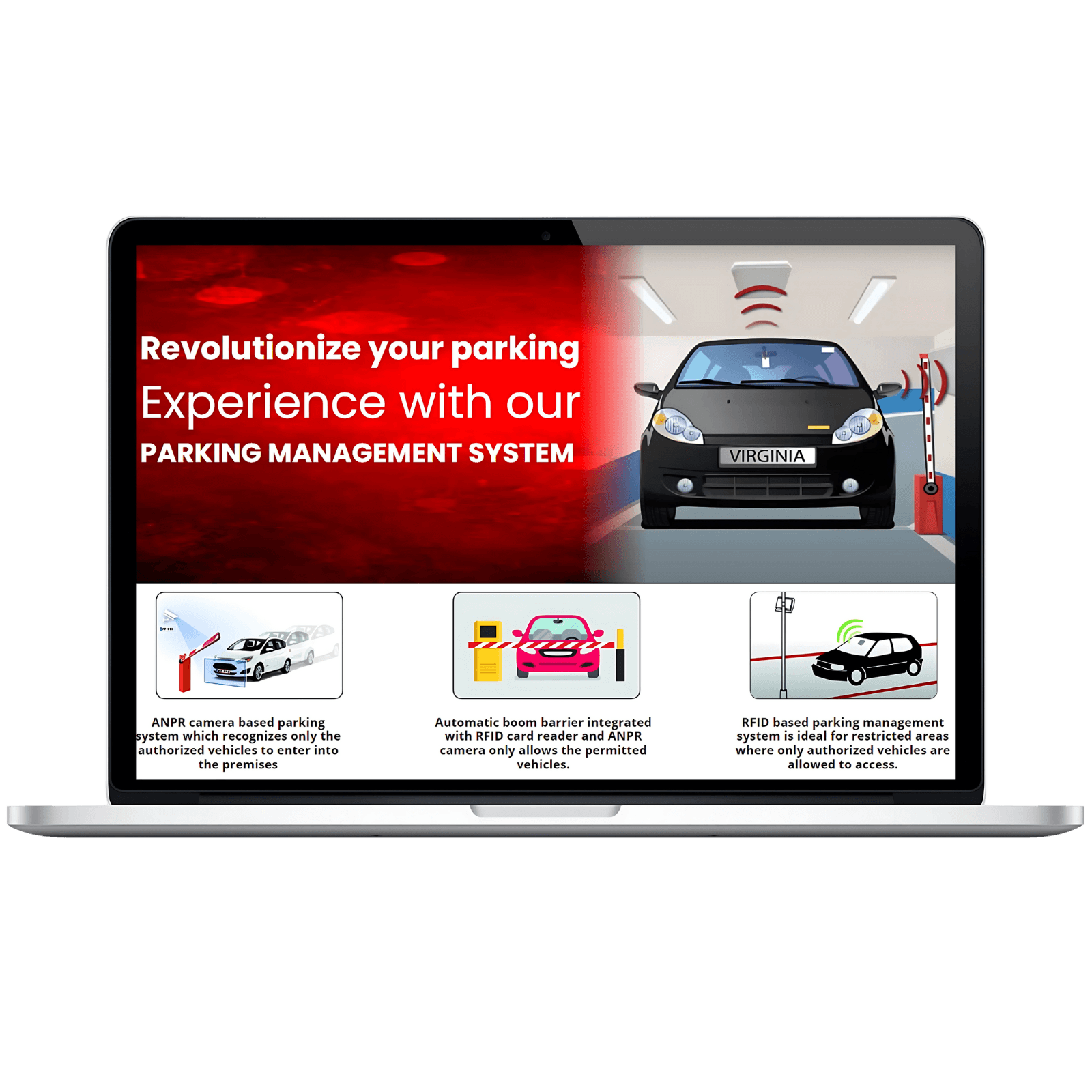
Reporting is where a parking system stops being a gate and becomes an operational tool.
- Occupancy over time: occupied count through the day, week and month, showing when the facility fills and empties. For a surge-driven site this is the single most useful output, because it turns an impression of the peak into a measured profile that staffing and lane design can be set from.
- Peak utilisation: the highest occupancy reached and how long it held. A facility at capacity for twenty minutes after a prayer time has a different problem from one at capacity all day.
- Duration distribution: how long vehicles stay, grouped into bands. A facility dominated by long stays is behaving as staff parking whatever it was designed for, and the remedy is policy rather than more bays.
- Settlement reconciliation: closed transactions matched against what terminals and stations recorded, shift by shift and operator by operator.
- Exception reports: lost tickets, overrides, forced opens, denied entries, unmatched exits and manually closed transactions. This reveals how the facility is really run, and reviewing it weekly catches both equipment faults and procedural drift before either becomes normal.
- Category and tenant reports: movements by category, and validations by tenant where a mixed-use development must attribute usage to its occupiers.
- Bay-level utilisation: available only on slot-sensor sites; shows which zones are used and which sit empty, which is how a facility discovers that its upper deck is never reached.
The exact report set, the export formats and whether reports can be scheduled vary considerably between platforms, and should be checked against a real requirement list during technical evaluation rather than assumed from a feature list.
Where Parking Management Systems Are Used in Saudi Arabia
- Mosque and pilgrim facilities at Makkah and Madinah: the most demanding parking environment in the Kingdom and one with very few parallels anywhere. Vehicle volumes are enormous, concentrated into defined windows, and mixed between private vehicles, coaches and shuttles. The requirements that follow are specific: entry and exit capacity sized from separate peak profiles, staged release points so vehicles are metered into the facility rather than arriving all at once, lane geometry that suits coaches rather than cars, and equipment fully exercised before the season rather than at the start of it.
- Malls and mixed-use developments: high turnover, heavy casual traffic, tenant validation and the strongest case for slot-level guidance, particularly in the enclosed basement structures common in Riyadh, Jeddah and across the Eastern Province where a driver cannot see the next level.
- Hospitals and medical cities: a difficult mix of staff, long-stay attendants, short visits and emergency traffic, normally requiring separate lanes, priority handling for ambulances and a clear rule that a barrier fault never obstructs an emergency approach.
- Universities and research campuses: large sites at Riyadh, Jeddah, Dhahran and Abha with arrival and departure peaks fixed by timetables, and a need to separate staff, student and visitor parking into zones with their own quotas.
- Staff parking at industrial facilities: the industrial cities of Jubail and Yanbu, petrochemical plants and port facilities run staff car parks whose traffic is governed by shift changes, so the entire day's movement happens in two short windows. Tags for the standing population and a dedicated contractor process for the rest is the usual pattern, with coastal corrosion protection on everything outdoors.
- Ports and logistics facilities: staff and visitor parking separated from goods vehicle movements, with the parking system often sharing a credential database with the wider gate process at Jeddah Islamic Port and King Abdulaziz Port rather than running independently.
- Government and ministry compounds: controlled, recorded entry with staff and visitor traffic separated, priority categories for official vehicles, and movement logs retained for audit even though nothing is charged.
- Stadiums, exhibition venues and event facilities: long idle periods followed by extreme short-duration peaks, which makes pre-event commissioning checks and metered release more important than any routine feature.
- Residential compounds and gated communities: residents identified by long-range tags, visitors recorded at the guard post through a visitor management process, and typically counting-based occupancy because the facility is small enough to see.
Across these sectors the common thread is that the parking system is rarely the whole answer. It is the recording and control layer inside a facility that also contains identification, guidance, payment and inspection stages, and it performs when it is specified as part of that facility rather than bought as a product. TimeWatch supplies parking, vehicle access and inspection equipment and is represented in Saudi Arabia through Shuruq Saudi as authorised national distributor for the Kingdom.
Integration With Other Systems
- Access control: sharing a credential database with doors and turnstiles, so one revocation removes both building and parking access at the same moment.
- Visitor management: a pre-registered visitor's vehicle recognised at the gate, the host notified on arrival, and the visit and the parking transaction linked as one record. This matters on ministry and corporate compounds where visitor processes are formal.
- CCTV and video analytics: cameras bookmarked against each lane event, which is what makes dispute resolution at the exit practical rather than theoretical.
- Plate recognition and long-range RFID: the identification layer, supplying both the credential for daily users and the reconciliation record for everyone else.
- Payment and accounting systems: closed transactions exported for reconciliation against the facility's financial records, with the export format agreed with whoever operates that process before the platform is selected.
- Fire alarm and building management systems: barriers driven to open and hold on a fire alarm. On any enclosed multi-level structure this should be treated as essential rather than optional, and the interface tested during scheduled drills rather than only at handover.
- Vehicle inspection and screening equipment: on higher-security facilities the entry barrier releases only once the inspection stage has returned a clear result, sequencing the lane so vehicles are held at the correct point.
- Tenant and property management platforms: validation terminals and allocation data feeding the systems the property team already operates.
- Traffic management and event control: at pilgrim transport and event facilities, lane control is sequenced with the instructions of the authorities directing the wider operation rather than run independently by the car park.
Installation, Design and Maintenance Considerations
Installation and design
As with barriers, most parking system problems trace to design and installation rather than to the equipment itself.
- Lane geometry and queue space: enough stacking ahead of the entry station that a queue does not spill onto a public road during a peak, and enough distance past the barrier that a vehicle clears the arm before the next arrives. At surge-driven facilities this is the first thing to get right and the hardest to fix later.
- Entry and exit sized separately: from the arrival profile and the departure profile, which at mosque, stadium and event facilities are not the same shape at all.
- Loop cutting and positioning: correct depth, width, turns and sealing, with arming, safety and exit loops placed for the real lane geometry and for the longest vehicle expected. Cut loops into sound surfacing and prefer a concrete apron where coaches and heavy vehicles brake and turn on asphalt that softens in summer.
- Delivery motorcycles defeat assumptions built for cars. A loop tuned for a car's metal mass may not reliably detect a motorcycle, so either sensitivity is raised (risking cross-lane detection) or a separate detection arrangement is used. Barrier timing set for a car is wrong for a motorcycle that clears the lane far faster, and a car-length timer invites the next rider through on the same open. Slot sensors sized for a car bay behave unpredictably over a motorcycle bay, so those areas are usually managed by area count instead. Plate size and position make motorcycles the hardest plate recognition subject on any site. Where a mall or mixed-use development receives continuous delivery traffic, the resolution is a dedicated lane with its own detection, timing and identification method.
- Reader and antenna aim: set so the read zone covers one lane's approach and does not spill into the next, and verified by measurement at commissioning rather than by observing that the barrier opened.
- Camera geometry and shading: plate recognition mounting height, angle and distance fixed at design stage, with a hood against low sun on the approach and a realistic cleaning interval for the window. Even where the camera is only the reconciliation layer it must be positioned properly, because an unreadable image is no help on the day a ticket goes missing.
- Thermal design of pedestals and cabinets: shading, finish colour, ventilation clearance and the position of any media-handling mechanism relative to direct sun. Decided before the plinth is poured.
- Slot sensor type matched to the area: ultrasonic in enclosed, conditioned levels; magnetic where dust loading on a transducer face would need constant attention, such as roof decks and open-air areas.
- Display positioning: entrance and aisle displays placed where a driver can read them with enough distance to act on them. A sightline problem, not a mounting-convenience problem.
- Power and network resilience: UPS at lanes and server with battery capacity sized for summer temperature, surge protection and earthing on long outdoor runs, and a defined behaviour for lanes when the link to the server is lost.
- Occupancy reconciliation procedure: decided at design, written into the operating routine, not discovered in month three.
- Signage and driver communication: where to take a ticket, where to settle, which lane is which, in the languages the facility's drivers actually read. A large share of lane delay is drivers not knowing what is expected of them.
Maintenance set from conditions, not from a calendar
A generic schedule of a fixed number of visits per year is a poor fit here, because the two variables that drive wear (cycle count and exposure) vary enormously between facilities in the same city. A staff car park inside a conditioned basement and an open-air pilgrim facility are not on the same curve.
- Service boom barriers at the manufacturer's interval, using lubricants suited to high ambient temperature, and keep a short log of thermal cut-outs. A unit that trips occasionally in June is telling you its duty margin is marginal, which is better learned in June than during a season.
- Clean ventilation paths, filters and barrier photocell lenses as scheduled tasks rather than reactive ones. On dusty sites this is the highest-value routine work.
- Clean plate recognition camera windows and IR illuminators, and check recognition rates against actual traffic rather than against the figure quoted at commissioning.
- Spot-check slot sensors against physical bay state, with particular attention to open-air and roof-deck areas after dust events; a sensor reporting an empty bay as occupied quietly skews guidance and nobody reports it.
- Test loop continuity and insulation resistance, especially after resurfacing, patching or any excavation near the lanes.
- Verify RFID read performance at each lane. A gradual decline usually means antenna drift, a loosened mount or a connector fault rather than a failing reader.
- Maintain dispenser mechanisms and media, store spare media somewhere conditioned, and check stock before any period of heavy demand.
- Inspect housings, fasteners, glands and cable entries for corrosion at coastal facilities, and rinse accumulated salt between service visits.
- Carry out the scheduled occupancy reconciliation, and record that it was done.
- Review exception reports weekly. Overrides, lost tickets, unmatched exits and denied entries are early indicators of both equipment faults and procedural drift.
- Verify UPS battery health against summer conditions, and test the fire alarm interface during scheduled drills.
- Take and verify database backups, and confirm the transaction and image retention period still matches the facility's requirement.
- Carry out an additional inspection after a major dust event and a full pre-season commissioning check at facilities with seasonal peaks.
Regulatory and Standards Context in Saudi Arabia
Security and life-safety installations in the Kingdom sit within the framework administered by the General Directorate of Civil Defense, which is the authority concerned with fire and life-safety arrangements on occupied premises. For a parking installation the relevant questions are the behaviour of barriers on a fire alarm in an enclosed structure, the clearance of egress routes, and the ability of emergency appliances to enter without obstruction. Where a barrier sits on a route that fire appliances or ambulances must use, its emergency-open behaviour and its interface with the fire alarm system are matters to settle with that framework in view from the design stage rather than at handover.
On the equipment side, specifications in the Kingdom commonly reference standards published by SASO (the Saudi Standards, Metrology and Quality Organization) and by GSO (the GCC Standardization Organization), together with the conformity and product-registration arrangements SASO administers for goods placed on the Saudi market. Large clients (government bodies, operators of pilgrim and medical facilities, port and industrial operators and major developers) also publish their own technical specifications, which frequently go beyond the general framework in areas such as ingress protection, coating systems, operating temperature range and data retention.
Two points should be stated plainly:
- Nothing on this page should be read as a statement that any particular product is approved, certified or compliant under any of these frameworks. This section is context, not a claim. Conformity status is a property of a specific model and a specific supply, evidenced by documentation for that supply.
- Current requirements must be confirmed with the relevant authority for the specific project. Requirements change over time and vary by facility type. The position that applies to a hospital, a retail development, an industrial staff car park and a pilgrim transport facility is not the same position, and the only reliable source is the authority and the client specification for that project at that time.
Handling of plate images, transaction records and personal data associated with registered vehicles is also governed by the applicable rules for the facility and its operator, and the retention period should be treated as an input to the specification rather than as a configuration decision taken after go-live.
Benefits and Limitations
Benefits
- Controlled, recorded vehicle access without a person making every decision at the lane.
- Regular users pass without stopping or opening a window, which is what clears the morning queue at a compound, campus or industrial staff gate and keeps drivers out of the heat.
- A complete transaction record (identity, category, times, duration, lane and settlement status) available for audit and for resolving disputes at the exit.
- Occupancy visibility, so drivers are not sent into a facility that is already full and operators know when capacity has genuinely been reached rather than estimating it.
- Guidance that reduces circulation time inside enclosed multi-level structures where sensors and displays are fitted.
- A measured peak profile, which is what lets a surge-driven facility be designed on evidence rather than on impression.
- Reporting that turns daily operation into data, and integration with access control, visitor management, CCTV and fire systems.
Limitations and considerations
- Counting-based occupancy drifts and needs scheduled reconciliation, or the free-space display stops being believed and then stops being used.
- The lost ticket is an operational problem, not a technical one. It will happen daily at any public facility and needs a documented, trained procedure before go-live.
- Every identification method has failure modes (unread tags, dust-filmed plates, jammed dispensers, darkened thermal media) so a resilient lane needs a fallback and an attended override.
- Tailgating is possible at any barrier lane, and each instance corrupts both the access record and the occupancy count.
- Delivery motorcycles need their own design for detection, timing, identification and space management rather than being treated as small cars.
- Slot-level detection is an infrastructure commitment running through the whole structure, and is awkward to retrofit into an operating facility.
- Heat and dust change the maintenance economy: lenses, vents, sensor faces and media need attention on an interval set by the site rather than by a generic schedule, and a facility that funds a temperate schedule will see reliability fall in its first summer.
- A parking barrier is a traffic control device, not a protective one. Where physically stopping a vehicle is the requirement, crash-rated bollards or road blockers are the appropriate equipment, with the barrier handling routine traffic in front of them.
Exact behaviour (identification ranges, sensor accuracy, report sets, category handling, integration options, derated duty figures and offline behaviour) depends on the specific equipment, the software platform and the site configuration, and should be confirmed against the datasheets and software documentation for the system being specified.
Frequently Asked Questions
How does a parking management system work?
It detects each arriving vehicle with an inductive loop, identifies it by RFID tag, number plate or issued ticket, validates that identity or creates a new entry record with a timestamp, and opens the entry barrier. The occupancy count increases and, where slot sensors are fitted, guidance displays direct the driver to a free bay. At exit the vehicle is identified again, the duration is computed from the two timestamps, settlement is applied where it applies, the barrier opens, the count decreases and the transaction is logged.
How does a parking system know how many spaces are free?
By one of two methods. A counting system starts from the known capacity, adds one on each validated entry and subtracts one on each validated exit. A slot-level system puts an ultrasonic or magnetic sensor on every bay and reports the true state of each one. Counting needs no hardware beyond the lanes but only produces a total; slot sensors give bay-by-bay accuracy and can drive in-aisle guidance and per-bay indicator lights.
Why does the free-space display in a car park become wrong?
Because counting-based occupancy is derived from lane events, and any miscount accumulates. A tailgating vehicle, a barrier held open during a surge, or a delivery motorcycle that falls below the loop detection threshold each produce an entry or exit that was never counted. These errors do not cancel out, so the figure drifts further from reality over days and weeks. Counting systems need a scheduled reset when the facility is empty, or a periodic physical count reconciled against the system figure.
What is a parking slot occupancy sensor?
A sensor dedicated to one bay that reports whether that bay is occupied. Ultrasonic sensors are mounted above the bay and measure the distance to the floor, registering occupied when that distance shortens. Magnetic sensors sit in or on the floor and detect the change a vehicle causes in the local magnetic field. The sensor feeds the server, which drives the bay indicator light and the aisle and entrance displays.
How does RFID parking access work?
A passive UHF RFID tag, usually a windscreen sticker, carries an identifier but no battery. The long-range reader at the lane radiates RF energy, the tag harvests enough of it to power its chip and reflects back its identifier, and the software checks that identifier against the permitted list. Because the read happens at several metres, the vehicle is identified while still approaching and the driver does not need to stop or lower a window. Tags must be positioned correctly on metallised or heat-reflective windscreens, which attenuate the signal.
What happens if a visitor loses the parking ticket?
Without the ticket the system has no link to the entry record, so it cannot compute the duration or close the transaction automatically. Facilities handle it in one of three ways: an operator searches open transactions by number plate using the image captured at entry, a defined lost-ticket procedure is applied and logged as an exception, or a supervisor issues a manual override with a recorded reason. This happens daily at any busy public facility, so the procedure should be decided and staff trained on it before the system goes live.
Is number plate recognition necessary in a parking management system?
Not necessary, but valuable in a specific role. Plate recognition is most useful as a backup identity rather than as the primary reader: when a ticket is lost, a tag fails to read or a transaction is disputed, the plate captured at entry is what reconstructs the record. Used as the sole identification method it inherits every plate condition on the road, including damaged, obscured and dust-filmed plates. Designed in as a reconciliation layer behind tickets or tags, it makes the lane resilient.
How does Saudi summer heat affect parking equipment?
In three ways. Barrier motors shed less heat as ambient temperature rises, so the permissible cycle rate falls below the catalogue figure and a unit sized on that figure can reach its thermal cut-out during a peak. Controllers inside dark pedestals standing in direct sun can throttle or reset, producing lanes that misbehave in the afternoon and recover by morning. And UPS batteries lose capacity and service life as temperature rises. Shading, light-coloured housings, clear ventilation paths and backup sized for summer conditions recover most of that margin.
Do printed parking tickets survive summer conditions?
Not reliably without attention. Thermal paper develops its image by heating a coating, and the same coating darkens when the paper itself gets hot, so a roll stored in a sun-exposed dispenser or a ticket left on a dashboard can discolour until the barcode no longer scans at the exit. Media also curls and becomes brittle, which contributes to dispenser jams at the busiest hour. Shading the cabinet, specifying media for the real temperature range, or using reusable RFID tokens instead are the usual responses.
Does dust affect plate recognition cameras and slot sensors?
Yes, and in this region it is the dominant reliability mechanism. A film of dust on a camera window or infrared illuminator scatters light and reduces contrast, so recognition rates decline gradually rather than failing outright and the decline is often noticed only in the exception report. Dust on an ultrasonic slot sensor attenuates both the emitted pulse and its return, which can leave a bay reported wrongly. Magnetic slot sensors are indifferent to surface dust, which makes them a reasonable choice for open-air and roof-deck areas.
How should parking be designed for a facility with extreme arrival surges?
Size the entry and exit lanes from separate peak profiles, because arrivals and departures at mosque, pilgrim, stadium and event facilities are not mirror images and departures are often far more concentrated. Put the fastest identification method on the surge traffic so the transaction leaves the critical path, stage and meter vehicles into the facility rather than admitting everything at once, specify barrier duty for the peak rate at the summer ambient rather than the daily average, and treat occupancy reconciliation as scheduled work because barriers will be held open during a genuine surge.
Which standards apply to parking systems in Saudi Arabia, and who supports the equipment locally?
Security and life-safety aspects fall within the framework of the General Directorate of Civil Defense, which is the relevant authority for barrier behaviour on fire alarm and for keeping egress and emergency access routes clear in enclosed structures. Equipment specifications commonly reference standards published by SASO and by GSO, and large clients often add their own technical requirements. Because requirements change and vary by facility type, the current position must be confirmed with the relevant authority for the specific project. For support within the Kingdom, TimeWatch equipment is represented in Saudi Arabia through Shuruq Saudi as authorised national distributor.
