
How Does a Toll Barrier System Work?
What Is a Toll Barrier System?
A toll lane is not a single device. It is a chain of cooperating subsystems (detection, classification, identification, decision, actuation and audit) in which the boom barrier is only the visible last step. Every lane must be able to answer, after the event, which vehicle passed, what class it was judged to be, what was charged, and on what authority the arm lifted. That audit requirement, rather than the barrier itself, shapes the whole design.
In the Kingdom the same architecture appears in several places at once: highway and expressway charging points, causeway and bridge crossings where traffic converges on a fixed number of lanes at a single structure, restricted-access roads serving airports and industrial estates, and large paid parking operations where the charge comes from duration rather than distance. The equipment is broadly the same; the traffic pattern and the climate it must survive are not.
How Does a Toll Barrier System Work?
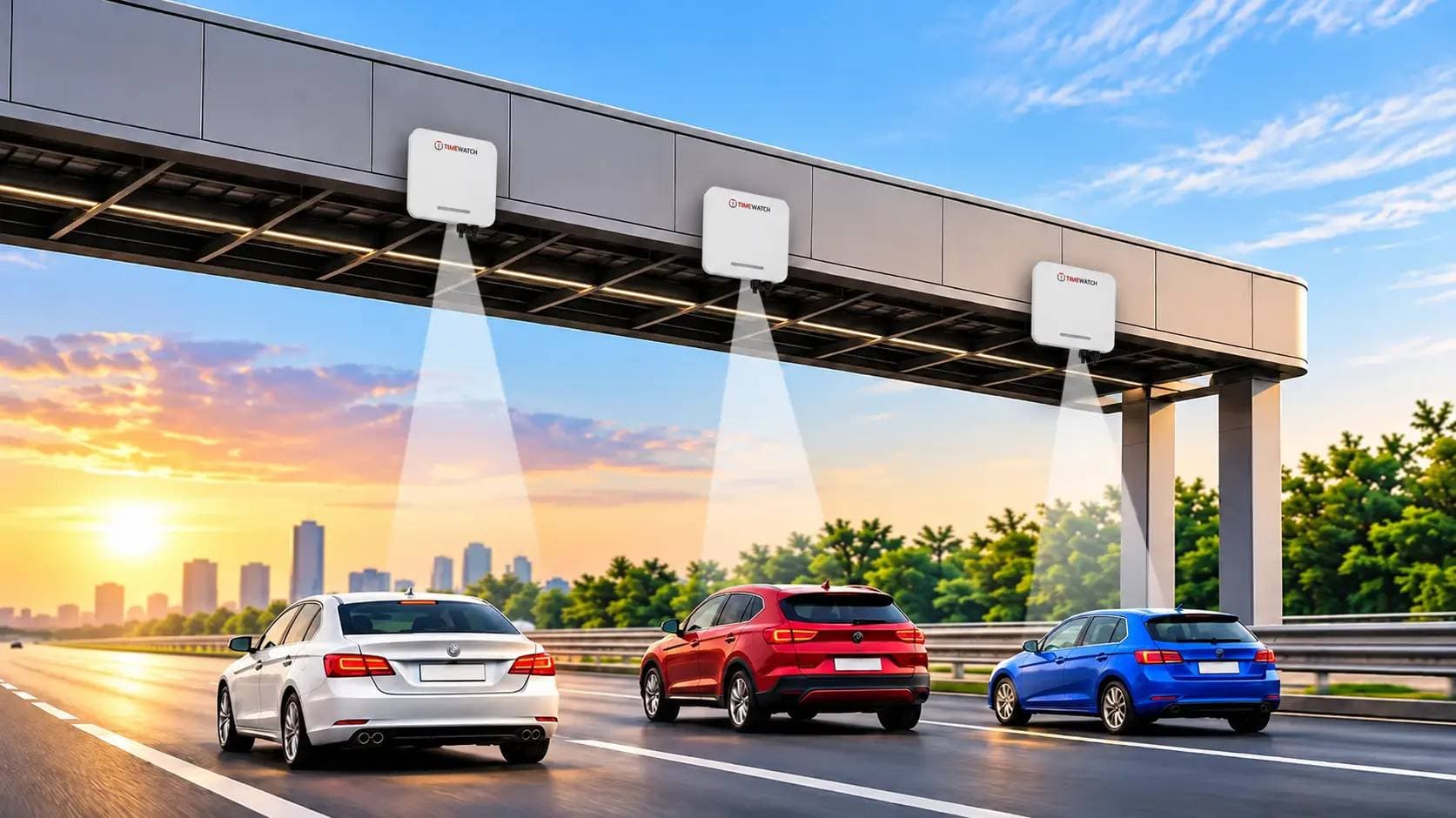
A toll barrier system works in six stages. Sensors detect that a vehicle has entered the lane. Classification equipment determines its class from axles, height and silhouette. A reader identifies it from a windscreen tag, a card or an issued ticket. The lane controller computes and validates the charge for that class against the linked account. On a valid transaction it releases the barrier, which opens, allows the vehicle through and closes behind it. The complete record is then logged to the plaza server and onward to the central host.
Detect, classify, identify, validate, release, log. Everything else on this page sits beneath those six words, including the environmental engineering that decides whether the sequence still runs at two in the afternoon in July.
The Toll Lane Sequence Step by Step
| Step | What happens | How it works |
|---|---|---|
| 1 | Vehicle enters the lane approach | An entry loop or presence sensor registers arrival and opens a new lane transaction in the controller. |
| 2 | Vehicle is classified | Automatic vehicle classification sets the class from axle counters in the road surface, laser or light-curtain profilers at the lane side, and loop signature analysis. Many plazas combine two methods rather than rely on one. |
| 3 | Vehicle is identified | A gantry-mounted reader interrogates the windscreen tag while the vehicle is still approaching. Attended and hybrid lanes may instead use a card, a ticket or operator entry. |
| 4 | Charge is computed | The lane controller applies the tariff table entry for the determined class, with any journey or exemption rule held in the plaza configuration. |
| 5 | Transaction is validated | The identifier is checked against account status held at the plaza: valid, active, not barred, and funded. |
| 6 | Barrier opens | The controller releases the barrier and updates the lane traffic light and the driver status display. |
| 7 | Vehicle passes | An exit loop and a photocell across the lane confirm the vehicle has moved clear of the barrier zone. |
| 8 | Barrier closes | The arm lowers once the lane is confirmed clear, timed so a following vehicle cannot tailgate through on the same transaction. |
| 9 | Transaction is logged | Class, identifier, amount, timestamp, lane, plate read and images go to the plaza server and onward to the central host for reconciliation. |
Where the sequence fails (no read, insufficient funds, a barred account, a disputed classification) the lane drops to an exception path. How well that path is designed is what separates a plaza that flows from one that queues, and it is a layout question at least as much as an equipment question.
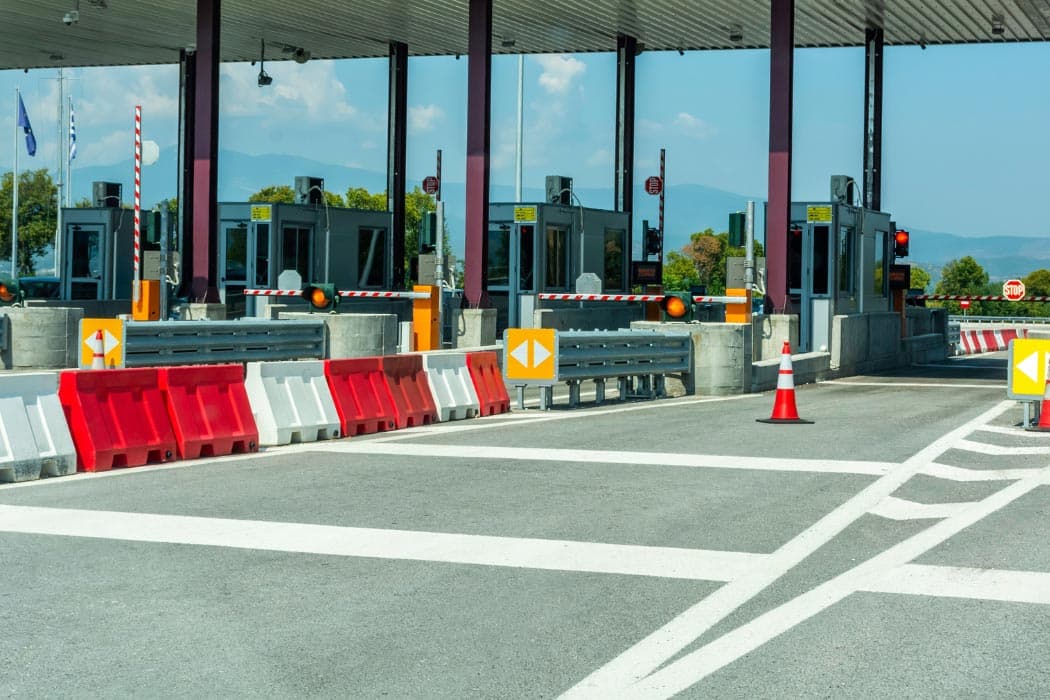
Main Components of a Toll Lane
| Component | Function |
|---|---|
| Overhead gantry and reader | Spans the lane carrying the reader and its antennas, so identification completes while the vehicle is still approaching the barrier. |
| Classification sensors | Axle counters set into the road, laser or infrared profilers at the lane side, and loop signature electronics. |
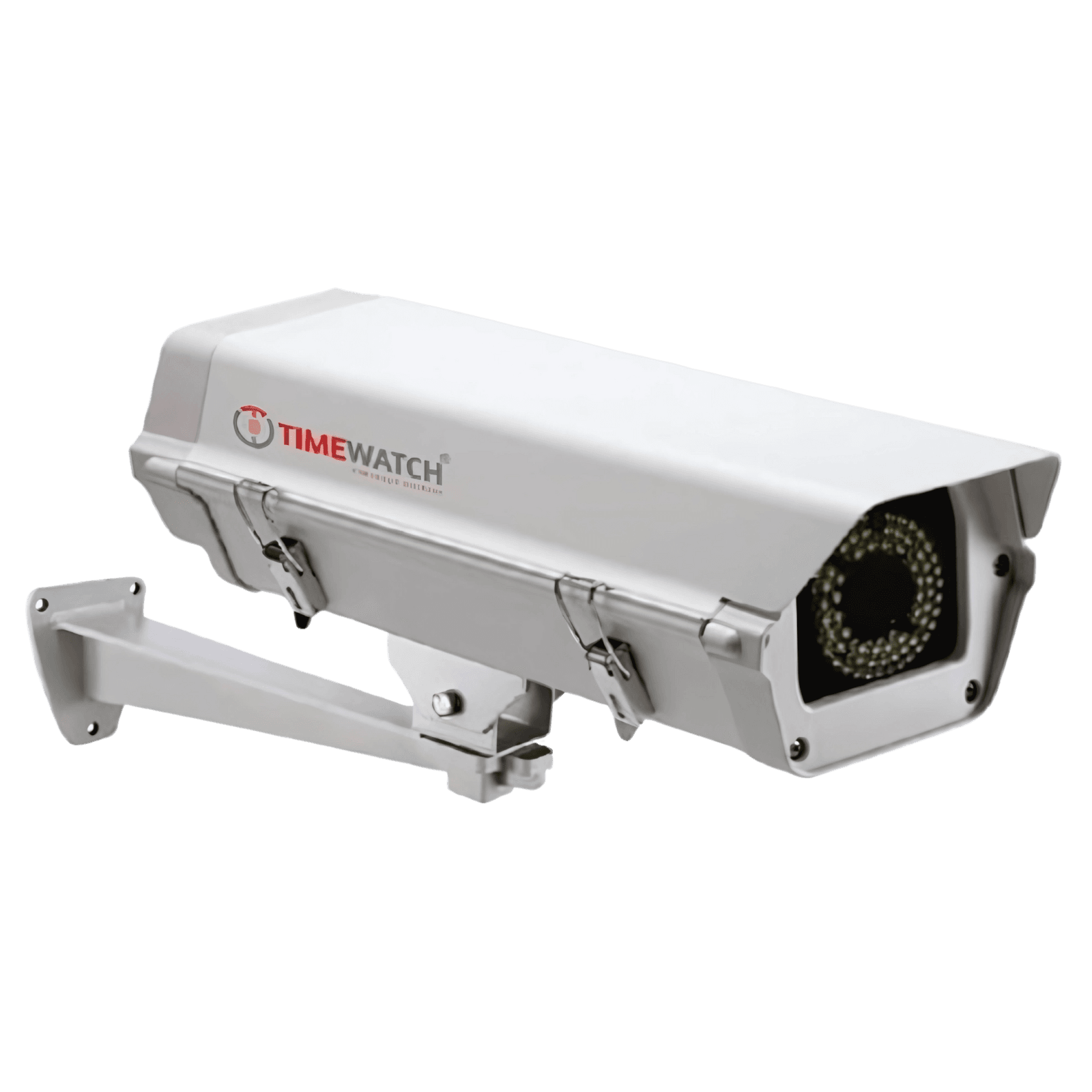
| Plate capture camera | Reads the number plate of every vehicle entering the lane, for enforcement and for reconciliation against the electronic transaction. |
| Lane controller | Sequences the transaction, applies the tariff table, drives the barrier, and communicates with the plaza server. |
| Boom barrier | The physical release mechanism, specified at a far higher duty rating than a commercial gate because of plaza cycle counts. |
| Traffic light and lane status display | Tells the driver whether the lane is open and whether the transaction succeeded. |
| Attended lane terminal | Operator position for exceptions, manual class override and non-electronic transactions. |
| Roadside equipment cabinet | Houses lane electronics, power conditioning and network equipment. Its thermal design and ingress protection are first-order items in this climate, not details. |
| Central host / plaza server | Aggregates lane transactions, holds account status data, and produces audit and settlement files. |
| UPS and power conditioning | Keeps the lane live through supply interruptions. Losing power mid-transaction creates a reconciliation problem, not merely an outage. |
The overhead gantry and the identification reader
The reader sits above the lane because a windscreen tag faces upward and forward. The read zone must cover enough of the approach that identification completes before the barrier, yet stay tight enough not to capture a tag in the next lane. Cross-lane reads are a genuine failure mode at closely spaced plazas, managed through antenna polarisation, power setting, shielding and lane channelisation, the workable arrangement depends on reader model and plaza geometry and should be proven on site.
Gantry equipment in the Kingdom carries two local burdens. It sits in direct sun all day with no shading available, and it is the hardest equipment on the plaza to reach, because reaching it means working over a live lane. Both argue for well-sealed enclosures and for mounting arrangements that let a technician work from a gantry walkway rather than from a lane closure.
Automatic vehicle classification
Classification exists because the charge depends on what the vehicle physically is, not on what its owner registered. Axle counters detect each axle crossing and can distinguish a raised axle from a loaded one. Profilers measure height and silhouette. Loop signature systems analyse the shape of the inductance change as the vehicle crosses, which carries information about length and undercarriage. The combination used depends on the traffic mix and the accuracy the plaza is held to by its operating agreement.
On corridors carrying a high proportion of coaches and articulated goods vehicles (pilgrim transport routes, industrial approaches, causeway crossings) the equipment must be configured for those vehicles rather than for cars. A profiler set up around passenger-car geometry will mis-handle a coach, and the resulting disputes land at the attended lane, consuming the operator time the plaza was designed to save.
Plate capture as the enforcement layer
This is the point most often misunderstood. Number plate recognition is not how the vehicle is identified for payment. The tag or credential is. Plate capture runs in parallel, recording every vehicle whether or not the electronic read succeeds, and it serves enforcement and reconciliation: recovering the charge after a failed read, evidencing insufficient-funds and barred-account events, and identifying vehicles that run the lane without a valid transaction.
Treating plate capture as the primary identification method is a specification error, because plate reading is affected by plate condition, approach angle, obscuring and illumination in ways an electronic read is not. Saudi plates carry both Arabic and Latin character sets, so the recognition engine must be configured for the dual-script format rather than a generic Latin-only model. That is a commissioning decision, not something to discover in service.
Lane controller, barrier and driver signalling
The controller is the only component that sees the whole transaction, which is why it, not the barrier, holds the timing and the safety logic. The barrier itself behaves like any other boom barrier: a safety loop beneath the arm inhibiting closure while a vehicle is present, a photocell across the lane that stops and reverses on obstruction, and obstruction detection at the drive. What differs is the duty rating and the tightness of the timing window. Driver signalling is part of throughput rather than cosmetics, a lane display washed out by overhead sun turns a completed transaction into a hesitant driver.
Barrier-Controlled, Hybrid and Free-Flow Lanes
| Aspect | Attended lane | Hybrid lane | Dedicated electronic lane |
|---|---|---|---|
| Identification | Operator entry, card or ticket at the booth; class set manually or from the classification equipment | Electronic read if a credential is present, otherwise a booth transaction; classification runs either way | Electronic read only, with plate capture as the enforcement record |
| Throughput | Lower, every vehicle stops for a manual transaction | Intermediate and variable, depends how many vehicles read cleanly | Greater, vehicles pass without stopping when the read succeeds |
| Staffing | Operator whenever the lane is open | Operator required, idle on successful electronic transactions | Unstaffed in normal operation; exception staff at plaza level |
| Typically suited to | Exceptions, oversize and exempt vehicles, mixed legacy traffic | Transitional lanes and variable traffic composition | Main through lanes where credential penetration is high |
A fourth arrangement removes the barrier altogether. In free-flow tolling there is no stop and no arm: vehicles are identified and classified at highway speed under a gantry, and the transaction completes afterwards against the account or the registered keeper. Free-flow raises corridor capacity and removes the plaza as a physical bottleneck, but it depends entirely on an administrative framework for pursuing unmatched passages, because nothing physically prevents a vehicle from continuing. Barrier-controlled lanes remain appropriate where the transaction must settle at the point of passage, and at enclosed facilities such as car parks, bridges and restricted-access roads where access itself is being controlled.
Within a barrier plaza, the distinction that matters operationally is what each lane type does when a transaction fails. A dedicated electronic lane has no local resolution path, so a failure blocks it until the vehicle is dealt with. A hybrid lane resolves the failure in place but runs slower on average. Plaza design therefore has to settle not only how many lanes of each type are needed, but where a vehicle that cannot complete a transaction physically goes.
How Desert Conditions Affect Toll Plaza Equipment
The mechanism described above does not change in Saudi Arabia (physics is physics) but the operating envelope around it does, and a specification that ignores it produces equipment that works through the commissioning winter and becomes a recurring complaint in its first summer.
Cabinet temperature and electronics reliability at 50 °C
Summer shade temperatures across much of the Kingdom sit above 45 °C, and inland sites regularly approach or pass 50 °C. A roadside cabinet in direct sun on an asphalt plaza is hotter still, gaining heat from solar radiation on its skin and from the surface beneath it while trying to reject the heat its own electronics generate into air already near their limit.
The failure mode is rarely dramatic. Electrolytic capacitors in power supplies and controller boards degrade faster at sustained high internal temperature, and industrial computers throttle or shut down on thermal protection. What the operator sees is a lane that becomes unreliable in the afternoon and recovers overnight, or a controller that fails after two summers rather than eight. Both are temperature outcomes misread as equipment quality.
The responses should be settled before the cabinet plinth is poured: site cabinets in the shade of the canopy rather than beside it; specify light finishes and, where the enclosure allows, a ventilated outer sunshield with an air gap; use filtered forced ventilation or a sealed air conditioner sized for solar gain as well as internal dissipation; keep ventilation paths clear of kerbs and adjacent equipment; and ask for the maximum operating temperature of the lane electronics rather than of the cabinet. Any cooling unit fitted brings its own filter, with a dust-driven cleaning interval.
Barrier duty rating and plaza throughput in summer
A barrier motor's duty cycle is a thermal rating, always quoted against a reference ambient that is usually moderate. As the surrounding air gets hotter, the motor sheds less heat per cycle, so the permissible cycle rate falls. On a toll lane this matters more than almost anywhere else, because toll lanes cycle continuously and the peak hour is frequently the hottest part of the day.
Establish the lane's real peak throughput in vehicles per hour, measured at the busiest period rather than averaged. Take the manufacturer's duty figure together with its stated reference ambient and maximum operating temperature. Select a unit whose rated duty at the plaza's design ambient still exceeds peak demand with headroom, asking a manufacturer for duty against temperature rather than a single headline number is a reasonable request. Where the figure is marginal, move up to a heavy-duty or hydraulic unit, or provide an additional lane so no barrier is loaded to its thermal limit.
Dust on optical plate-reading equipment
Airborne sand and dust is the dominant wear mechanism on Saudi plazas, and the equipment it hurts most is optical. A film of fine dust on a camera window scatters light, reduces contrast between plate characters and their background, and softens the edges the recognition engine relies on to segment characters. The capture still happens; what degrades is the confidence of the read, and a low-confidence read is one a person has to review later.
The same film on a laser profiler window or an infrared illuminator reduces the returned signal and can produce classification errors. On a photocell lens it attenuates the beam until the receiver reads it as broken, so the barrier refuses to close or reverses with no obstruction present. False obstruction detection on a dusty plaza is far more often a dirty lens than a faulty sensor. Dust in vents and filters also reduces the airflow the thermal design assumed, so a plaza correctly specified on day one quietly loses margin as its filters load.
The specification responses are ingress protection chosen for solid particles first, with gasketed doors and sealed cable entries confirmed as installed rather than as catalogued; camera and illuminator housings with hoods, and wipers or air purge where the plaza can support them; mounting positions that keep optical windows out of the direct line of wind-blown dust from the carriageway; and cleaning intervals driven by conditions, with an inspection after any significant dust event regardless of the schedule.
Road-embedded components and surface temperature
Loops and axle-counter sensors live in the road, and the road is the hottest part of the plaza. Surface temperatures in direct summer sun run far above air temperature. A loop sealant that cures hard will crack and admit water and grit; one that softens at those temperatures will migrate out of the slot and leave the wire exposed. The design calls for a sealant specified against the actual surface temperature range of a Saudi carriageway and applied within its stated window.
Bitumen also softens in extreme heat, so under heavy, slow-moving traffic the surface deforms where vehicles brake and accelerate. That movement works the loop wire, stretches it and can break the conductor, producing an intermittent loop that behaves differently in the afternoon than at dawn. Concrete aprons through the lane itself are the standard answer on heavy-vehicle plazas, and are far easier to provide at construction than to retrofit.
Coastal plazas on the Red Sea and the Gulf
Inland and coastal plazas are different corrosion environments. Inland, at Riyadh or Tabuk, the air is dry and corrosion slow; the dominant problems are heat and abrasive dust. Along the Red Sea at Jeddah and Yanbu, and along the Arabian Gulf at Jubail, Dammam and Al Khobar, humidity is high for much of the year and the air carries salt aerosol, which draws moisture from humid air and holds a conductive film against metal long after visible wetting has gone.
A coastal plaza therefore needs corrosion protection specified rather than assumed: hot-dip galvanised steel for gantries, cabinet frames and barrier housings, or galvanising plus a quality coating; stainless fasteners of an appropriate grade with attention to dissimilar-metal contact; sealed glands and conduit chosen for marine exposure; foundations that drain rather than pond; and routine fresh-water rinsing. Conformal coating on control boards resists a humid salt atmosphere considerably better than bare board, and is a reasonable thing to ask about during technical evaluation.
Seasonal Peaks on the Makkah and Madinah Corridors
Routes serving Makkah and Madinah present a traffic profile with very few parallels anywhere. During the Hajj season and the Ramadan Umrah peak, volumes on the approach corridors rise far above what the same road carries for the rest of the year, concentrated into defined periods and directions and dominated by coaches and shuttle vehicles rather than cars. Any charging or access-control point on those corridors is sized by that peak, not by its annual average. Several consequences follow, all of them design-stage decisions:
- Size lane count and duty rating against the peak hour of the peak season, modelled for coach-dominated traffic. A plaza comfortable for eleven months and inadequate for three weeks has been sized on the wrong number.
- Geometry must suit coaches. Lane width, loop size and position, profiler aiming and barrier arm length all follow the longest and tallest vehicle expected, not the most common one. A safety loop sized for a car will release the barrier while a coach is still beneath the arm.
- Exercise everything before the season, not at the start of it. A pre-season check that fully cycles each barrier, verifies every safety device, tests the manual release, cleans every optical window and proves the exception path is worth more than any number of calendar-driven visits. Equipment idle through a quiet period is exactly what fails under sustained load.
- Plan the exception path for volume. At normal traffic a failed transaction is an inconvenience; at peak it is a stopped coach in a through lane with hundreds of vehicles behind it. Where that vehicle goes (a resolution bay, a widened shoulder, an attended lane reachable without crossing traffic) is a layout decision that cannot be made later.
- Interface with the authorities directing the operation. Lane status, mode changes and emergency opening on these corridors are sequenced with wider traffic management, so external interfaces and manual override arrangements matter as much as automatic behaviour.
What Actually Limits Toll Lane Throughput
Throughput is limited by read reliability at the gantry, not by barrier speed, which is where most plaza troubleshooting goes wrong. A lane reading reliably at 95 per cent does not spend 95 per cent of its time running smoothly; it spends its time handling the other 5 per cent, because each failed read turns a three-second pass into a manual intervention with a stopped vehicle and a queue behind it. Making the barrier faster changes very little. Raising the read rate changes everything.
The largest real-world blocker is not read failure but an account that cannot complete the transaction. The vehicle is identified perfectly and the transaction still cannot close. The system has done its job; the question is where that vehicle goes next and how quickly it clears the through lane. That is plaza design, not technology.
The other routine friction is reconciliation between classification and registration. The classification equipment reports what the vehicle physically is; the credential reports what it was registered as. A credential registered for a car and fitted to a light commercial vehicle produces a mismatch the lane must resolve, and it is a common source of dispute at the booth and in later audit. Plazas handle it with defined override procedures and by retaining the classification evidence and images with the transaction record.
Where Toll and Paid-Access Lanes Are Used in Saudi Arabia
- Highway and expressway corridors: long-distance routes where traffic composition shifts sharply between commercial movement on weekdays and passenger movement at weekends and holidays, which is what makes lane-type allocation difficult and argues for lanes that can be remoded rather than fixed.
- Causeway and bridge crossings: a fixed crossing such as the King Fahd Causeway concentrates an entire traffic stream into a defined number of lanes at a single structure, with no alternative route and no ability to add capacity. Classification accuracy, read reliability and the exception path all carry more weight at a crossing than on an open corridor.
- Pilgrim transport infrastructure at Makkah and Madinah: staging areas, controlled release points and restricted-access roads, where the lane meters and segregates vehicle flow from pedestrian areas as much as it charges.
- Port and industrial approaches: gate lanes at Jeddah Islamic Port and King Abdulaziz Port at Dammam, and at the industrial cities of Jubail and Yanbu, where the barrier sits inside a wider gate process of identification, document verification, weighbridge and release.
- Airport forecourts and restricted-access roads: where the charge derives from duration rather than distance, and the same lane architecture serves access control as well as charging.
- Large retail, mixed-use and campus parking: high-turnover paid parking at developments across Riyadh, Jeddah, Dammam and Al Khobar, and at universities and medical cities at Dhahran and Abha, using the same chain at smaller scale.
The common thread is that the barrier is rarely the whole answer. It is the moving part of a lane that also contains detection, classification, identification, verification and recording stages, and it performs well when specified as part of that lane rather than bought on its own. TimeWatch supplies boom barriers, long-range readers, plate recognition and parking and traffic control equipment, and is represented in Saudi Arabia through Shuruq Saudi as authorised national distributor for the Kingdom.
Integration With Other Systems
- Central host and settlement: lane transactions flow upward for clearing and reporting, with the plaza holding account status locally so lane decisions do not depend on a live link.
- Plate recognition and video management: plate reads and images bound to the transaction, so any passage can be reviewed from its log entry rather than by searching recordings.
- Weighbridges: at port and industrial lanes the barrier releases only once weighment is recorded, with the classification result cross-checked against it.
- Traffic management and variable message signs: lane status, mode and queue data fed to approach signage so drivers select a lane before committing to it.
- Access control and parking platforms: on restricted-access roads, campus estates and duration-charged parking, the same credential database governs the lane, the gate and the building.
- Emergency and civil defence interfaces: a monitored contact driving barriers to open and hold, clearing routes during an evacuation or for emergency access.
Installation Considerations for Saudi Plazas
- Gantry position and antenna aiming: fix the read zone at design stage, verify on site that adjacent lanes do not cross-read, and provide maintenance access that does not require a lane closure.
- Classification sensor geometry: accuracy depends on the vehicle crossing counters, profilers and loops in a known order, configured for the largest class the corridor carries.
- Lane channelisation: kerbs and islands holding vehicles in lane through the read zone improve read rate and classification accuracy at once, and reduce cross-lane reads.
- Cabinet siting and thermal design: shaded position, light finish, clear ventilation paths, cooling sized for solar gain as well as internal dissipation. Decided before the plinth is poured.
- Camera mounting and illumination: height, angle and illuminator position determine capture reliability across the dual-script plate format. Specify hoods against low-angle sun and a realistic cleaning interval.
- Loop workmanship and surfacing: slot depth, turn count, twisted feeder tails, a sealant rated for Saudi surface temperatures, and concrete rather than asphalt aprons on heavy-vehicle lanes.
- Earthing, surge protection and UPS sizing: exposed electronics on long runs need proper earthing and arrestors, and the UPS must ride through interruptions without losing a live transaction. Size battery capacity at summer temperature, since capacity and service life both fall as temperature rises.
- Commissioning in realistic conditions: a plaza commissioned at seven in the morning in February has not been tested. Verify thermal behaviour, read rate and optical performance during the hot part of the day, and ideally of the year.
Maintenance Considerations
- Track lane read rate as a metric. A gradual decline is the earliest warning of a reader, alignment or contamination problem, and it is visible in the data long before it is visible at the lane.
- Verify classification accuracy against a sampled manual count at defined intervals, and after any change to lane geometry or surfacing.
- Clean camera windows, illuminator faces, profiler windows and photocell lenses on a conditions-driven interval, and always after a significant dust event.
- Clean cabinet ventilation and cooling filters before the summer peak rather than after it.
- Log thermal cut-outs and controller restarts. A unit that trips occasionally in May is reporting thin margin, which is far better learned in May than in August.
- Test loop continuity and insulation resistance, particularly after any resurfacing or patching of the plaza apron.
- Inspect barrier arms for impact damage, check balance spring tension, and reset tension after any arm change. Confirm the safety loop still inhibits closing and test the manual release before it is needed.
- At coastal plazas, inspect gantry steelwork, cabinet fasteners and cable entries for corrosion at every visit, and rinse accumulated salt between visits.
- Run a full pre-season check on corridors with a defined seasonal peak, exercising every barrier, safety device and exception procedure before volumes rise.
Regulatory and Standards Context in Saudi Arabia
Security and life-safety installations in the Kingdom sit within the framework administered by the General Directorate of Civil Defense, the authority concerned with fire and life-safety arrangements on occupied premises, including how barriers on emergency access and egress routes behave. Where a toll or access lane sits on a route emergency vehicles must use, its emergency-open behaviour and its interface to alarm systems are matters to settle with that framework in view from the design stage.
On the equipment side, specifications commonly reference standards published by SASO, the Saudi Standards, Metrology and Quality Organization, and by GSO, the GCC Standardization Organization, together with the conformity and product-registration arrangements SASO administers for goods placed on the Saudi market. Radio equipment such as a long-range reader is separately a question of permitted frequency band and radiated power in the Kingdom, established for the specific reader variant supplied. Scheme operators and major clients also publish their own technical specifications, which frequently go beyond the general framework on ingress protection, coatings and operating temperature range.
Two points should be stated plainly. Nothing on this page should be read as a statement that any particular product is approved, certified or compliant under any of these frameworks: this section is context, not a claim, and conformity status is a property of a specific model and supply, evidenced by documentation for that supply. And current requirements must be confirmed with the relevant authority for the specific project, because they change over time and vary by project type. Charging rules, exemption categories, vehicle classification definitions and settlement arrangements are likewise set by the scheme's operator and the relevant authority, and must be established before equipment is selected rather than inferred from how another country's scheme works.
Benefits and Limitations
- Non-stop passage when the credential reads, reducing queueing and stop-start plaza traffic, and reducing the time vehicles spend idling in summer heat.
- A complete audit trail: every passage timestamped, classified and image-backed, which is what makes later reconciliation and dispute resolution possible at all.
- Consistent classification applied by sensor rather than operator judgement, which also removes a source of friction at the attended lane.
- Not a security device: a boom arm will not stop a vehicle driven through it. Lane running is handled after the fact, which is what the plate capture layer exists for; protective requirements call for crash-rated equipment behind the barrier.
- Read reliability governs everything, and account failures sit outside the system's control, to be absorbed by plaza layout and procedure rather than by equipment selection.
- Environmental conditions erode rated performance. Duty figures, capture rates and electronics life are all stated at reference conditions a Saudi plaza does not meet for several months of the year, and the specification has to account for that explicitly.
- Performance varies by equipment and geometry: read range, classification accuracy, barrier timing and capture rates are specifications of particular models in a particular layout, and should be confirmed against datasheets and site testing rather than assumed.
Toll Lane vs Standard Boom Barrier Gate
| Toll lane | Standard boom barrier gate | |
|---|---|---|
| Primary purpose | Charge computation, transaction validation and auditable release | Access authorisation and passage recording |
| Identification | Credential read at range, with plate capture as the enforcement backstop | RFID, plate recognition, card, ticket or manual button |
| Classification | Required, the charge depends on vehicle class | Usually not required |
| Duty cycle | Very high, and specified at the plaza's design ambient temperature | Low to medium at most sites |
| Consequence of an error | A revenue discrepancy that must be reconciled centrally | An access event to be reviewed |
The mechanism at the arm is the same; what differs is everything upstream. A barrier specified for a compound entrance in Riyadh will not survive a toll lane's cycle count on a corridor approaching Makkah, and a toll lane's decision chain would be redundant at a compound entrance.
Frequently Asked Questions
How does a toll barrier system work?
A toll barrier system detects an approaching vehicle, classifies it from its physical characteristics, identifies it electronically from a windscreen tag or an issued credential, computes the charge for that class and validates it against the linked account, then releases the boom barrier. Once the vehicle has passed and the lane is confirmed clear the barrier closes, and the complete transaction is logged to the central host.
How is a vehicle identified in an electronic toll lane?
By a credential read at range, most commonly a passive UHF RFID windscreen tag interrogated by a reader mounted on an overhead gantry. The reader radiates energy, the tag draws power from it and sends back its identifier, and the lane controller checks that identifier against account status held at the plaza. Attended and hybrid lanes may instead use a card, a ticket or operator entry.
What is automatic vehicle classification at a toll plaza?
Automatic vehicle classification determines a vehicle's charging class from its physical characteristics rather than from what it declares. Plazas use axle counters set into the road, laser or light-curtain profilers that measure height and silhouette, and loop signature analysis. The methods vary by plaza and many sites combine two of them, with the combination chosen to suit the traffic mix the corridor actually carries.
Is the number plate camera used to charge the toll?
No. The credential read is the primary identification method for payment. Plate capture runs alongside it as the enforcement and reconciliation layer, recording the plate of every vehicle entering the lane. Its output is used where the credential did not read, where the account could not complete the transaction, and where a vehicle ran the lane without a valid transaction.
What is the difference between free-flow tolling and a barrier-controlled lane?
Free-flow tolling identifies and classifies vehicles at highway speed under a gantry with no barrier and no stop, settling the transaction afterwards against the account or the registered keeper. A barrier-controlled lane holds the vehicle until the transaction completes and then releases an arm. Free-flow raises corridor capacity but depends on an administrative framework for pursuing unmatched passages; barrier control remains appropriate where the transaction must settle at the point of passage or where access itself is being controlled.
How do summer temperatures above 45 degrees Celsius affect toll plaza equipment in Saudi Arabia?
They reduce what the equipment can sustain. A barrier motor's duty cycle is a thermal rating quoted at a moderate reference ambient, so as the air gets hotter the permissible cycle rate falls. Roadside cabinets in direct sun run hotter still, which shortens the life of power supplies and controller electronics and can cause afternoon shutdowns that recover overnight. The responses are to derate the barrier against the plaza's design ambient, shade and light-finish the cabinets, and size cooling for solar gain as well as internal heat.
Does airborne dust affect number plate reading at a Saudi toll plaza?
Yes. A film of fine dust on a camera window scatters light and reduces the contrast between plate characters and their background, so the capture still happens but the confidence of the read falls and more passages need manual review. The same film reduces returned signal on laser profiler windows and infrared illuminators, and on a photocell lens it can make the receiver read the beam as broken so the barrier refuses to close. Cleaning intervals should follow conditions, with an inspection after any significant dust event.
How should a plaza on the Makkah and Madinah corridors be prepared for Hajj and Umrah peaks?
By sizing it on the peak rather than the average, and by exercising it before the season rather than at the start of it. Lane count, barrier duty rating, loop sizing, profiler configuration and arm length should all follow coach-dominated traffic at the busiest hour of the busiest period. A pre-season check should fully cycle every barrier, verify every safety device, test the manual release, clean every optical window and prove the exception path, because a stalled transaction at peak means a stopped coach in a through lane.
How fast does a toll barrier close?
Fast enough to prevent a following vehicle tailgating through on one transaction, but not so fast that it strikes the vehicle that has just passed. Closing is normally triggered by the exit loop de-energising rather than by a fixed timer, with a safety loop and a photocell preventing closure on a vehicle. The exact timing is a specification of the barrier model and its duty rating.
Why do toll lanes queue even when the barrier is fast?
Because throughput is governed by read reliability at the gantry, not by barrier speed. A lane reading reliably at 95 per cent spends its time handling the other 5 per cent, and each failure turns a non-stop pass into a stopped vehicle and a manual intervention. Raising the read rate reduces queueing far more than making the barrier move faster.
Which regulations and standards apply to toll lane equipment in Saudi Arabia?
Security and life-safety installations in Saudi Arabia fall within the framework of the General Directorate of Civil Defense, and equipment specifications commonly reference standards published by SASO, the Saudi Standards, Metrology and Quality Organization, and by GSO, the GCC Standardization Organization. Radio equipment such as a long-range reader is separately subject to the permitted frequency band and power limits in the Kingdom. Charging rules, exemption categories, classification definitions and settlement arrangements are set by the scheme operator and the relevant authority, so the current position must be confirmed for the specific project rather than assumed.
